
Bone conduction earbuds are built for listening while keeping your ears open to the world—useful for workouts, commuting, and calls on the go. Instead of sealing your ear canal, they transmit sound as gentle vibrations through the cheekbone/temple area, so you can stay more aware of traffic, announcements, and conversation. Below is a practical guide to how this style works, what to expect from sound and fit, and which features matter most when choosing a waterproof, true wireless pair with a microphone.
Traditional in-ear earbuds push sound through the air into the ear canal, often using silicone tips to create a seal. Bone conduction earbuds work differently: small transducers rest against the skin near the cheekbone or temple and send vibrations through bone to your inner ear, leaving the ear canal open.
This open-ear approach is a strong fit for runners, cyclists, dog walkers, and anyone who wants environmental awareness without constantly pausing playback. It also works well for people who dislike ear tips, experience ear fatigue, or frequently switch between music and quick conversations.
There are trade-offs. You may notice lighter bass impact than sealed in-ear models, since there’s no airtight chamber to reinforce low frequencies. Sound can also leak more at higher volumes, especially in quiet places. Finally, fit matters a lot: a slight shift in contact points can change clarity, particularly for vocals and spoken audio.
These aren’t ideal for quiet office listening at higher volumes (leakage may bother nearby coworkers) or for anyone who wants strong noise isolation. They’re also not hearing protection—if you need protection from loud noise, look to certified options rather than relying on awareness-based designs.
For training and daily carry, water resistance is non-negotiable. Look for an IP rating and match it to your routine (sweat, rain, or splashes). IP ratings are defined by the IEC 60529 standard, which explains what the numbers mean for dust and water exposure (IEC IP Code overview).
Bluetooth 5.x devices often deliver improved efficiency and more robust connections in busy areas like gyms or downtown sidewalks. Bluetooth version alone doesn’t guarantee range, but it’s a helpful baseline—especially when paired with a well-built antenna design (Bluetooth Core Specification).
A “good mic” is a combination of mic placement, noise handling, and stable Bluetooth. Prioritize easy call controls (answer/end and mute if available) so you’re not fumbling mid-run. If calls are a key use case, test with a friend outdoors where wind and traffic are realistic.
Because bone conduction relies on consistent contact, the best pairs feel secure without squeezing. A stable frame reduces rattling and helps vocals sound clearer during movement. Comfort also matters for longer walks or long shifts—pressure hotspots around the temple area can creep up over time.
Physical buttons can be easier when your hands are sweaty or you’re wearing gloves, while touch controls can be faster but may misfire with rain or heavy sweat. Choose what fits your routine.
| Feature | Why it matters | What to look for |
|---|---|---|
| Water resistance (IP rating) | Handles sweat/rain and reduces worry during workouts | An IP rating shown on the product details; higher typically indicates more protection |
| Bluetooth version | Affects connection behavior, efficiency, and compatibility | Bluetooth 5.x; stable pairing and range in real use |
| Mic and call handling | Clear calls while walking, commuting, or training | Reliable answer/end controls; consistent voice pickup |
| Fit stability | Prevents shifting and improves clarity | Secure frame/loops; comfortable contact points that stay put |
| Sound profile | Determines music enjoyment and speech clarity | Balanced mids for vocals; reasonable volume without harshness |
| Charging and battery routine | Affects how often charging is needed | Convenient case; quick top-ups between sessions |
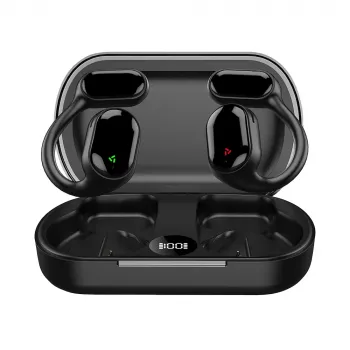
If the goal is open-ear awareness for training, commuting, and quick calls, Bone Conduction True Wireless Earbuds with Mic, Waterproof Bluetooth 5.3 Headphones are a practical starting point. Before checkout, verify the waterproof/IP rating details on the product page, the pairing steps for your phone, what accessories are included, and how the controls are laid out for play/pause and calls.
Planning to use them on hikes and trips as well? Pair your open-ear setup with a destination guide like Top 10 Must-See U.S. National Parks + Fast Facts for quick trail inspiration and on-the-go planning.
For hearing safety, open-ear listening can tempt higher volume in loud areas. Keep volume moderate, take breaks, and be mindful of overall exposure—especially during long commutes or extended workouts (CDC guidance on noise and safe listening).
They can be, but call quality depends mostly on microphone design, placement, and Bluetooth stability. A snug, stable fit and reducing wind exposure (by turning slightly away from gusts) often improves clarity.
Many earbuds are water-resistant rather than fully waterproof, and the difference is usually expressed with an IP rating. Check the exact rating and the stated limits for sweat, rain, and whether submersion is allowed.
Yes, open-ear designs can leak at higher volumes. Keeping volume moderate, improving positioning, and using them in less quiet environments helps when privacy matters.












Leave a comment