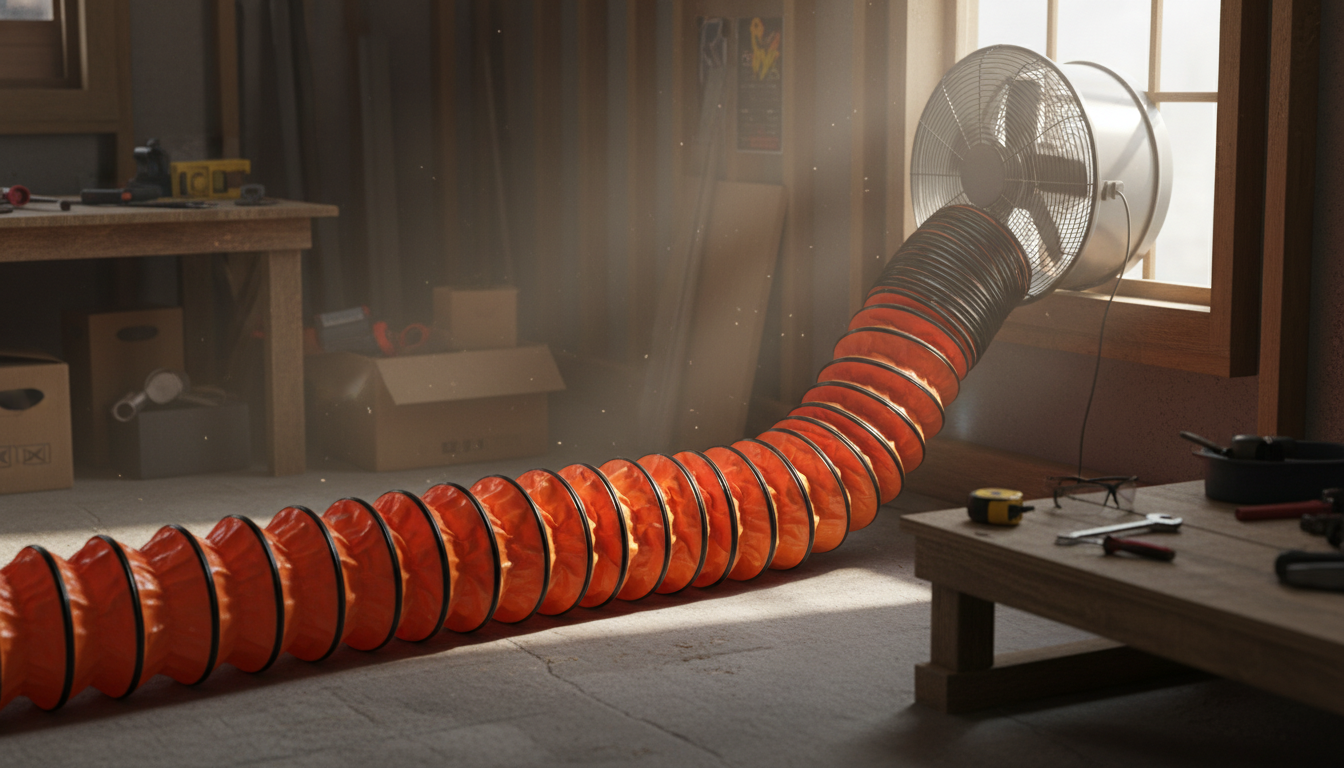
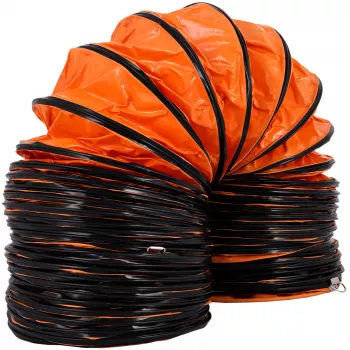
A long, flexible ventilation duct can make or break an exhaust setup—especially when air needs to be routed around obstacles, out of a workspace, or into a temporary vent point. This 32-foot PVC duct hose is designed to pair with 12-inch exhaust fans and helps move fumes, heat, dust, and stale air where it needs to go with fewer layout compromises.
If you’re building a temporary exhaust path for a job site or upgrading a home workshop, the right duct length and fit can mean steadier airflow, fewer leaks, and less time fighting kinks and awkward fan placement.
For general guidance on controlling airborne contaminants and improving indoor air, it can help to review workplace and indoor air quality resources from OSHA and the EPA.
| Spec | What to verify before buying | Why it matters |
|---|---|---|
| Diameter compatibility | 12-inch fan outlet/inlet size and any adapters | A tight fit reduces air leaks and keeps airflow consistent |
| Total run length | Distance to vent point plus slack for bends | Too-short runs force sharp turns and reduce performance |
| Bend count and tightness | Number of corners and how tight they are | More/tighter bends add resistance and lower effective airflow |
| Mounting plan | Straps, hooks, clamps, window panel, or vent hood | Prevents sagging, kinks, and accidental disconnections |
| Air type and environment | Dust, moisture, fumes, temperature, abrasion risk | Helps choose the right hose material and protection |
A 12-inch exhaust fan can move a lot of air, but the duct run determines how much of that airflow actually makes it to the discharge point. The goal is to reduce resistance so the fan isn’t working against unnecessary static pressure.
As a practical rule, if your setup needs multiple sharp turns or you’re exhausting heavier-laden air (dusty work, strong odors, humidity), it’s worth spending extra time on routing and support so the hose keeps its full shape.
For temporary jobs, a clean “in-to-out” airflow path is often the biggest win: place the fan where it can pull contaminated air efficiently, then run the duct to a clear outdoor discharge away from doors, open windows, or other air intakes.
Yes. Longer runs and multiple bends increase resistance and can reduce delivered airflow, so keep the route as straight as possible, use gentle curves, and support the hose to prevent flattening.
Use a properly sized clamp at the fan flange and another at the discharge end. If minor leaks appear, seal joints with foil HVAC tape and re-check clamp tightness after the first hour of operation.
Often yes for temporary ventilation, but suitability depends on the specific chemicals involved. Vent outdoors, avoid ignition sources, and follow the product label and SDS instructions for safe use.












Leave a comment