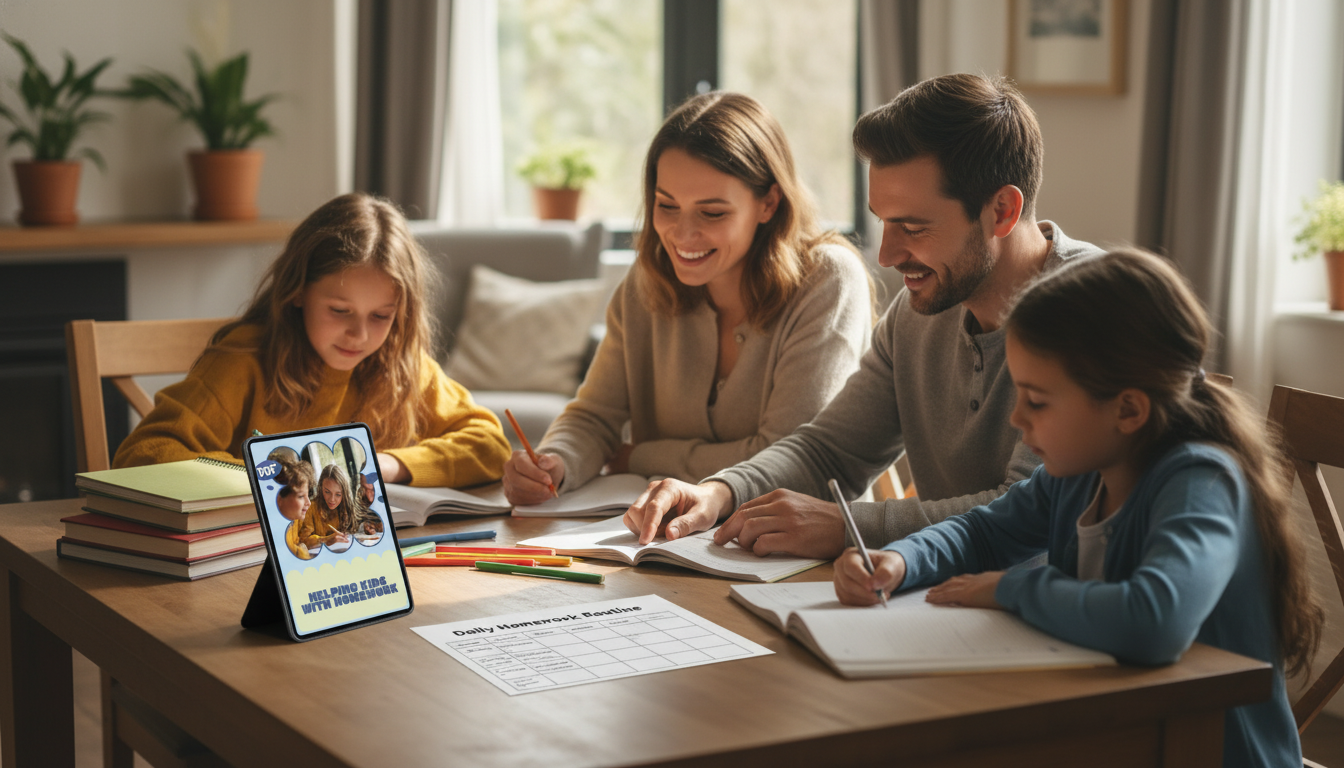
Homework time runs smoother when expectations are clear, the environment is consistent, and kids feel supported without being rescued. This daily system breaks homework into predictable steps families can repeat each school day, plus a printable checklist to reduce reminders, arguments, and last-minute surprises.
If homework has been drifting into a nightly power struggle, a simple sequence can act like guardrails: the same start, the same steps, the same finish. Over time, kids learn, “This is just what we do,” which makes motivation less of a daily debate.
Keep the zone boring on purpose. When the setup doesn’t change, your child spends less mental energy “getting ready” and more energy actually working.
| Step | Time | Parent role | Child role |
|---|---|---|---|
| Reset + snack | 10 min | Provide calm transition, keep it screen-free | Refuel, settle body and brain |
| Review assignments | 5 min | Ask what’s due; help prioritize | List tasks; choose start point |
| Focus block 1 | 15–25 min | Stay nearby; redirect gently | Work on hardest or most urgent task |
| Short break | 5 min | Encourage movement/water | Move, breathe, reset |
| Focus block 2 | 15–25 min | Support only when stuck | Finish remaining tasks |
| Check + pack | 5–10 min | Spot-check; ensure name/date; pack | Confirm done; place in turn-in spot |
Time-boxing matters because it protects sleep and keeps homework from expanding to fill the evening. The CDC’s sleep guidelines are a helpful reminder that kids do best when routines leave room for wind-down and consistent bedtime.
One simple boundary that helps: “I can teach, but I can’t do it for you.” That keeps you in a coaching role and helps your child build the skill of getting unstuck. The American Psychological Association’s homework guidance also emphasizes structure, encouragement, and keeping responsibility with the child.
If you want a ready-to-use version, this internal resource includes a structured routine and an easy-to-print tracker: Printable homework checklist and simple daily system. Many families find that once the checklist becomes “the boss,” parents can step back without homework falling apart.
Consider pairing the weekly reset with a small, screen-free “reward ritual” that doesn’t add pressure—something like letting your child choose the weekend outing or planning a family mini-adventure. If your family enjoys trip planning together, a digital guide like Top 10 Must-See U.S. National Parks + Fast Facts can be a fun, low-stakes way to celebrate follow-through.
A practical range is about 10–20 minutes in early elementary, 30–60 minutes in upper elementary, and 60–120 minutes in middle/high school, depending on school expectations. Use focus blocks with short breaks, and if homework regularly blows past your time limit for more than a week, message the teacher to flag the pattern and ask what to prioritize.
Start with a calm transition (snack/water, restroom), then set a tiny first step like “open the assignment page” and run a 5-minute start timer. Offer a choice between two tasks (“math first or reading first?”) and schedule a brief break after the first focus block; if refusal is frequent and tied to confusion, contact the teacher to clarify directions or difficulty.
Use a short question script: “Read the directions to me,” “What’s the example show?” and “What’s your first step?” Model one example only if needed, then have your child do the next problem while explaining their steps out loud so you can check understanding without taking over.












Leave a comment