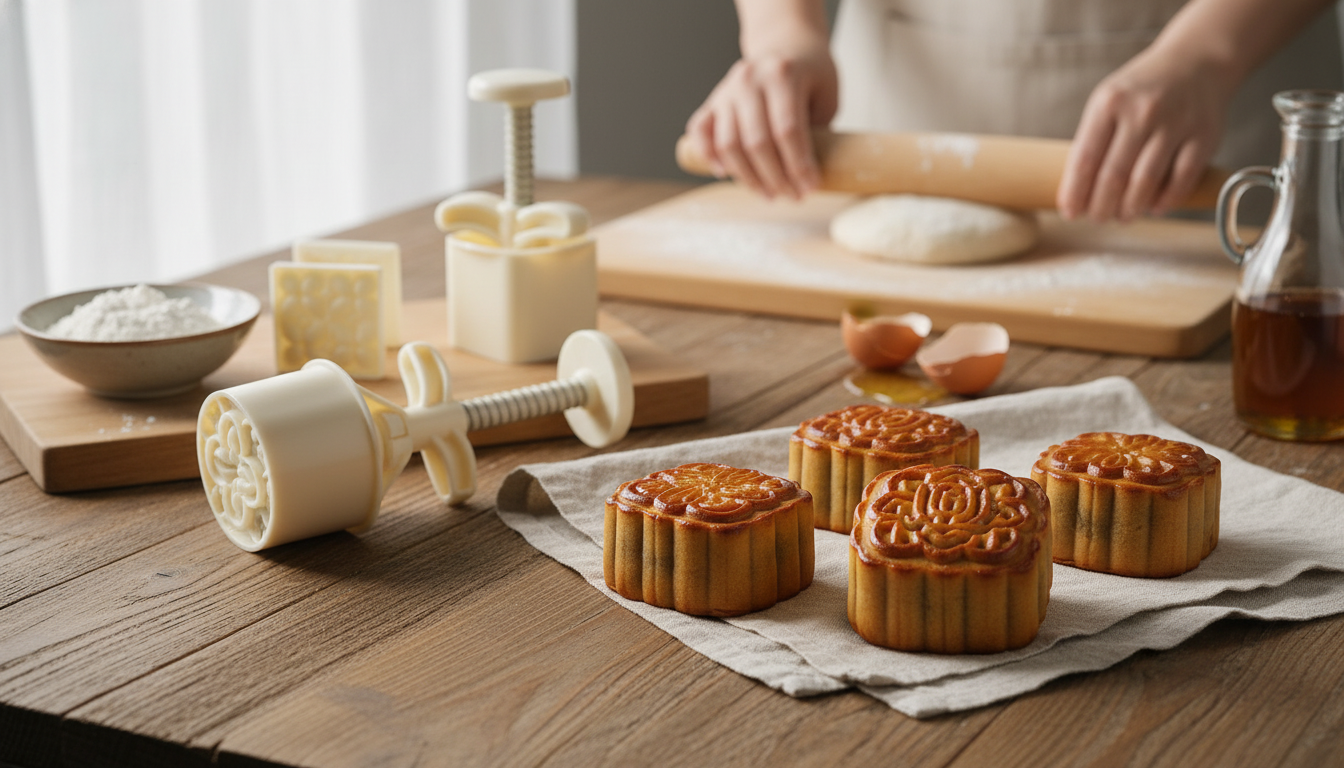
A traditional moon cake mold helps turn homemade pastries into crisp, detailed cakes with clean edges and an elegant top design. This Cantonese-style mold features an auspicious cloud pattern that suits Mid-Autumn celebrations, gifting, and everyday baking when a polished finish matters. For more guidance, see [PDF] FOOD IN CHINESE CIVILIZATION by James Foo Woo.
For many families, moon cakes are as much about presentation as flavor—especially during the Mid-Autumn Festival, when foods are shared, boxed, and gifted. If you’re curious about the holiday’s background and symbolism, Encyclopaedia Britannica’s overview of the Mid-Autumn Festival is a helpful starting point. For further reading, see [PDF] Lee, Amy Fro – ERIC.
The cloud motif is a classic decorative element in Cantonese-style pastry design: it looks celebratory without requiring extra piping, carving, or edible paint. Once baked and cooled, the pattern reads clearly on the surface, giving each moon cake a “gift shop” finish that looks intentional and festive.
If you’re building a cohesive gift set, the pattern also pairs beautifully with decor pieces that echo traditional aesthetics—like a centerpiece vase on the table where desserts are served.
A well-made press mold does more than stamp a design. It standardizes size, height, and edge definition, which is especially useful when working with rich fillings and delicate doughs. Uniform shapes tend to bake more evenly, look tidier in trays, and stack neatly in packaging.
If you’re shopping for a dedicated tool, the Cantonese Style Moon Cake Mold – Auspicious Cloud Pattern Pastry Tool is an easy add to a holiday baking kit, especially when you want an imprint that stays crisp after baking and cooling.
Getting a clean, sharp imprint is mostly about light dusting, consistent portioning, and a steady press. Once you find your rhythm, the workflow becomes quick and satisfying.
| Stage | Tip for cleaner results |
|---|---|
| Dusting | Use a light coating; too much powder can soften the pattern |
| Portioning | Keep dough/filling weights consistent for even height |
| Pressing | Apply steady pressure rather than repeated jabs |
| Releasing | Release straight up to avoid smearing edges |
| Cooling | Let cakes cool completely before packing to protect the design |
Because the design has fine grooves, cleaning sooner (before dough and oils set) makes a noticeable difference. A gentle routine preserves both the pattern and the mold’s performance over time.
For general guidance on materials and safety around surfaces that touch food, the U.S. FDA’s information on food contact substances is a useful reference.
| Mold style | Best for | Trade-offs to consider |
|---|---|---|
| Traditional Cantonese press mold | Crisp imprints and classic baked moon cakes | May need careful dusting and steady release technique |
| Stamp-style cookie/pastry press | Cookies and quick decorative tops | Can be less suited to filled, thicker moon cakes |
| Silicone cavity mold | Easy release and quick cleanup | May produce a softer-looking surface with less definition |
For a table-ready presentation piece that complements Mid-Autumn gatherings, consider the Hand-Painted Jade Porcelain Cheongsam Vase – Retro Chinese Ceramic for Flower Arrangements as a centerpiece alongside dessert boxes and tea service.
Lightly dust both the mold and the dough ball with flour or starch, then press with steady, even pressure. Avoid over-dusting since excess powder can blur the imprint; re-dust sparingly between pieces as needed.
Yes—this style works well for shortbread or pressed cookies and other pastries that can hold an imprint. For the cleanest pattern, use a dough that’s not overly sticky, and keep the thickness consistent before pressing.
Wash with warm water and mild soap soon after use, then use a soft brush or cloth to reach the grooves. Dry thoroughly before storing, and avoid abrasive pads or harsh chemicals that can scratch or dull the details.










Leave a comment