
Sometimes, but it depends on what you mean by “PVC.” Rigid plumbing PVC pipe (the white schedule 40/80 used for drains) is not a standard, code-friendly choice for most vent fan exhaust applications. Many bathroom fans, range hoods, and general-purpose exhaust fans are designed to vent through smooth metal duct (galvanized steel or aluminum) or listed flexible duct. Using plumbing PVC can create problems with code compliance, heat ratings, and moisture management.
If the fan is moving warm, humid air (like a bathroom) or greasy air (like a kitchen hood), the wrong duct material can become a safety issue. Range hoods, in particular, commonly require metal ducting due to heat and grease considerations. For bathroom ventilation, PVC may still be discouraged because it’s typically not listed as ventilation duct and can be harder to support and seal correctly through transitions, dampers, and roof/wall caps.
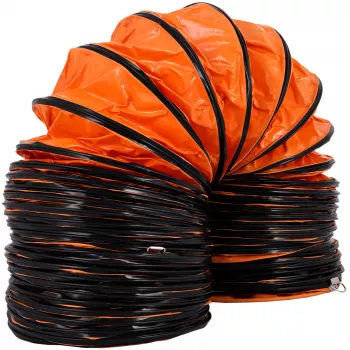
PVC-type materials are more appropriate when you’re talking about flexible PVC duct hose that’s made for ventilation and matched to the fan’s size. Those products are built for airflow, are easier to route around obstacles, and are commonly used for applications like inline exhaust setups where a large diameter and smooth interior can help maintain performance. If you’re exploring a large flexible option, see the detailed guide here: 32ft flexible PVC duct hose for 12-inch exhaust fans.
First, confirm what the fan manufacturer allows—installation instructions typically spell out acceptable duct materials and maximum duct length. Next, consider temperature: if the air could be hot, choose metal. Finally, think about condensation. Any duct carrying humid air should be routed to the outdoors, sealed at joints, and sloped/insulated as needed to reduce dripping and mold risks.
When in doubt, using the fan’s recommended duct type (often smooth metal or a listed ventilation duct) is the safest, most predictable approach for airflow and compliance.
Smooth metal duct (galvanized steel or aluminum) is often the best all-around choice because it’s durable, handles temperature well, and keeps airflow resistance low. Use the duct size specified by the fan and keep runs as short and straight as practical.












Leave a comment