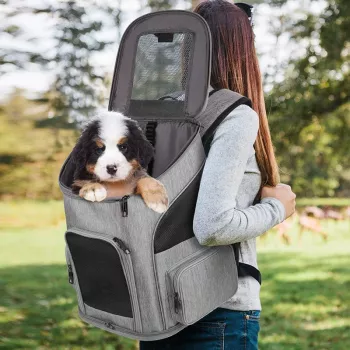
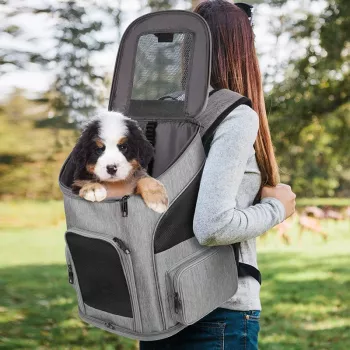
A breathable pet backpack makes it easier to bring a small dog or cat along on walks, errands, and day trips—without overheating, awkward carrying, or constant stopping. The right design balances airflow, structure, and safe restraint so a pet can ride calmly while the wearer stays comfortable.
Comfort comes from two sides of the carrier: the environment inside the backpack for your pet and the support system that keeps you steady while you move. When both are handled well, short outings feel easy—and longer trips become far more realistic.
For general travel safety reminders—especially for car rides and public transport—reputable guidance from the American Veterinary Medical Association (AVMA) is a helpful baseline.
Most comfort issues trace back to fit. A backpack that’s slightly too small can force a cramped posture, while one that’s overly large may allow sliding that makes pets uneasy. Before purchasing, grab a soft measuring tape and compare your numbers with the carrier’s interior dimensions.
| Check | Why it matters | What to look for |
|---|---|---|
| Back length & chest girth | Prevents cramped posture and pressure points | Interior length/height that allows turning and a natural sit |
| Weight limit | Protects seams and reduces sagging | Limit above the pet’s current weight, plus a small buffer |
| Ventilation coverage | Helps reduce heat stress | Mesh panels on multiple sides; not just a single window |
| Base stability | Reduces bouncing and shifting | Structured bottom; reinforced seams |
| Restraint + closures | Prevents escape and falls | Internal leash clip; secure zippers/buckles |
Heat safety is especially important on summer sidewalks and in direct sun. The American Kennel Club (AKC) outlines warning signs and prevention steps that apply even when a carrier is designed for airflow.
A backpack carrier should never feel like a “set it and forget it” accessory. A few small habits make daily use more predictable and help prevent close calls.
For additional travel-calming tips and practical precautions, the ASPCA travel tips are a solid reference for planning and pacing.
The easiest backpack rides happen when the carrier becomes familiar before the first real trip. A gradual approach can reduce scratching, vocalizing, and “freeze” behavior that sometimes appears with enclosed spaces.
Yes, if the backpack has enough interior space to sit and turn, a stable base, strong ventilation, and a secure tether attached to a harness. Short acclimation sessions at home also help most cats settle faster.
It depends on temperature, your dog’s health and breed, and how active the outing is. Plan frequent breaks, offer water, avoid direct sun, and stop if panting or stress signs increase.
A harness is safer than a collar because it distributes force across the chest and shoulders. This reduces the risk of neck injury if your pet shifts, pulls, or startles.










Leave a comment