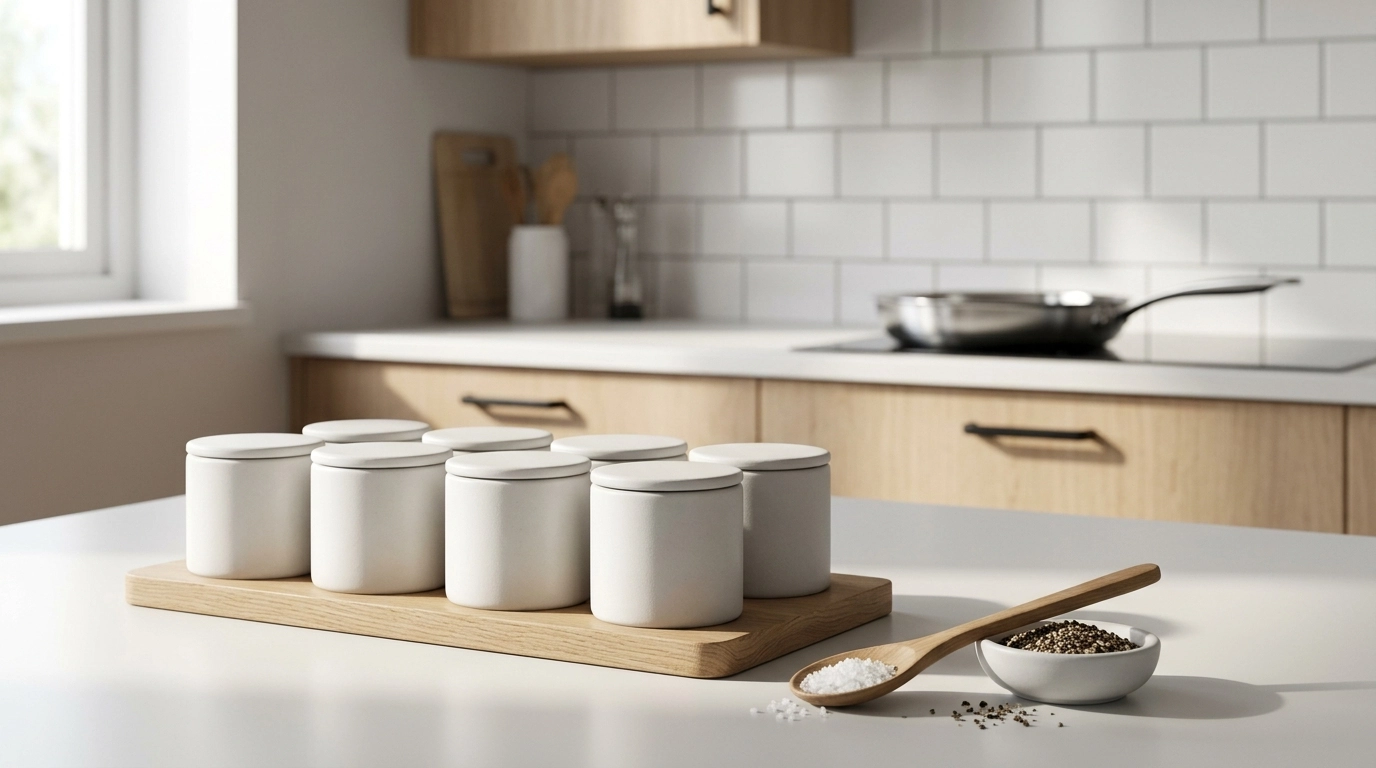
A tidy seasoning setup makes everyday cooking faster and the kitchen feel more intentional. A Nordic-style ceramic spice jar set combines a clean, white look with countertop-friendly storage—helpful for keeping essential spices within reach without visual clutter. Below is a practical breakdown of what to look for, how to set it up for smooth cooking, and how to keep ceramic containers looking crisp over time.
Ceramic spice jars fit naturally into Scandinavian-leaning spaces because they simplify what you see every day. Instead of a jumble of different labels, colors, and bottle shapes, a matched set brings the seasoning area into the same visual “language” as white tile, pale wood, stainless steel, or matte black hardware.
A well-designed set is all about repeatable habits: grab, measure, close, and move on—without wiping up stray chili flakes afterward. The Nordic White Ceramic Spice Jar Set – Minimalist Kitchen Seasoning Containers is built for a clean, coordinated countertop station that pairs well with wood, stone, stainless steel, and matte black fixtures.
| Consideration | Why it matters | What to check |
|---|---|---|
| Footprint | Prevents crowding near the cooktop | Measure the tray/shelf area and leave clearance for hands |
| Lids/closures | Helps keep spices fresher and reduces moisture clumping | Look for snug-fitting lids and easy one-hand opening |
| Pouring/dispensing | Improves control and reduces mess | Verify whether jars are meant for pinching, spooning, or shaking |
| Cleaning | Keeps white ceramic looking bright | Confirm surfaces can be wiped easily; avoid abrasive scrubbers |
| Labeling | Avoids mix-ups during cooking | Plan for simple labels or a consistent naming system |
The difference between a pretty spice setup and a useful one is consistency. A small routine—where each jar always returns to the same spot—prevents drift and keeps the station looking intentional even on weeknights.
If your main cooking area includes a griddle or wide pan for batch meals, keeping seasonings within easy reach is even more valuable. Pairing a clean spice station with a versatile cooking surface like the Reversible Pre-Seasoned Cast Iron Griddle with Non-Stick Surface for BBQ and Cooking can make weeknight prep feel more organized: fewer trips to the pantry, less chance of leaving jars open while you flip and season.
Even beautiful containers can’t rescue spices stored in the worst conditions. Flavor loss is usually about exposure—too much light, too much heat, or repeated moisture from cooking steam.
For broader kitchen handling reminders, the USDA’s guidance is a helpful reference: Kitchen Companion—Your Safe Food Handbook (USDA FSIS).
If you’re purchasing ceramics for food contact, it’s also worth being mindful of material safety and following any seller care notes. The FDA’s overview is a practical resource: Lead in Food, Foodwares, and Dietary Supplements (FDA).
Ceramic is commonly used for dry food storage when the containers are clean, dry, and intended for food contact. Keep jars away from heat and steam, avoid using any container with damaged or questionable interior glazing, and follow the seller’s care instructions.
Keep daily staples you reach for constantly—like salt, pepper, garlic powder, and chili flakes—on the counter for speed. Store rarely used spices and bulk refills in a cool, dark cabinet to reduce light/heat exposure and to avoid countertop clutter.
Use simple monochrome labels with consistent typography and short names, or try label bands that can be swapped as your rotation changes. For an even cleaner look, place small labels on the underside and keep a matching reference list inside a cabinet door.









Leave a comment