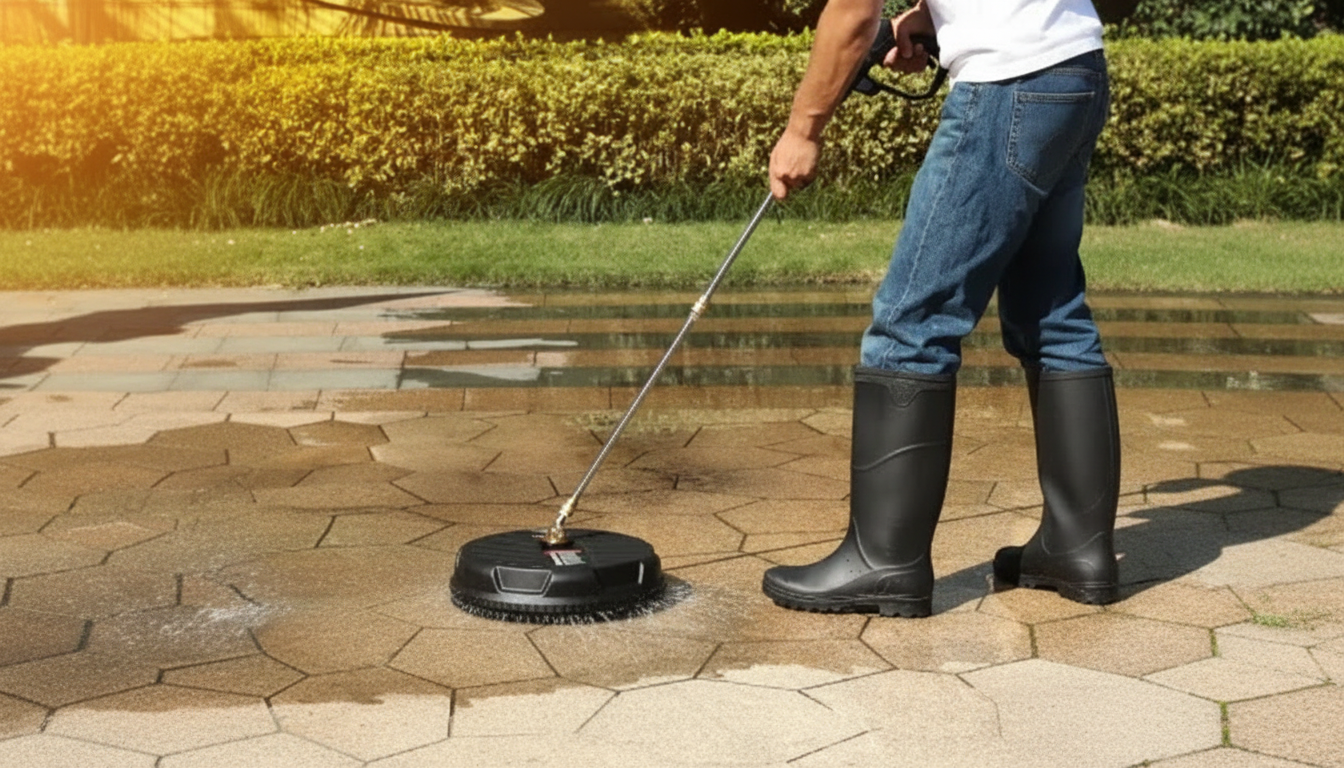
The right bar pressure for floor cleaning depends on the surface and the cleaning tool. For most residential outdoor floors, a practical range is about 100–150 bar (1,450–2,175 PSI) for concrete, pavers, and similar hard surfaces. This level is usually strong enough to lift grime, algae, and embedded dirt without needing to linger in one spot.
Concrete driveways, sidewalks, patios: 100–150 bar is a solid starting point. Increase toward the upper end for neglected, stained areas, but keep the wand or surface cleaner moving to avoid “etching” lines in softer concrete.
Brick and pavers: 70–120 bar often works well. Too much pressure can scour joint sand or disturb polymeric sand, especially if you hold the spray close.
Tile, stone, and coated floors: 50–100 bar is safer, particularly on sealed or painted surfaces. Higher pressure can strip coatings or force water into seams.
Wood decks: Many decks clean best at lower settings (roughly 40–80 bar) with the correct nozzle and technique. High pressure can fuzz the wood grain fast.
Cleaning speed and results are also driven by water flow (GPM/LPM), nozzle choice, spray angle, and how evenly the tool distributes water. A surface cleaner attachment can make a big difference because it maintains consistent distance from the floor and reduces streaking, helping you get more done at moderate pressure.
Start at the low end for the material, test a small, hidden area, and adjust upward only as needed. If you see surface roughening, striping, or joint sand blowing out, back down the pressure, increase distance, or switch to a wider spray angle.
For a practical walkthrough of pairing pressure washers with a surface cleaner (including quick-connect setups and a 15-inch option), see this surface cleaner attachment guide.
For large flat areas, a surface cleaner is usually faster and more uniform, with fewer streaks. It also helps control overspray and keeps nozzle distance consistent to reduce the risk of etched lines.









Leave a comment