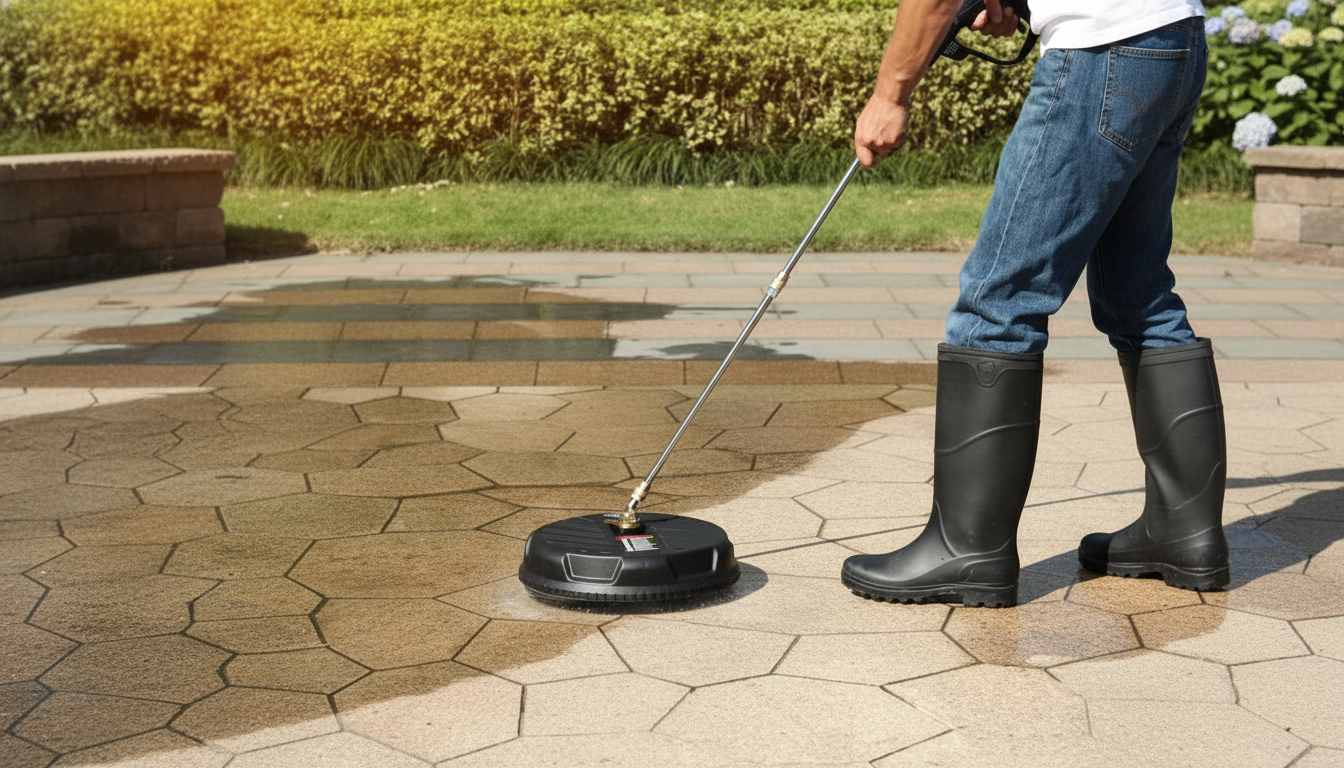
A surface cleaner attachment helps wash large concrete areas faster and more evenly than a spray wand alone. This 15-inch option pairs a wide cleaning path with a quick-connector, aiming for smoother coverage on driveways, patios, sidewalks, and garage floors while reducing streaks and overspray. For anyone tired of chasing lines across flatwork, a floor-style surface cleaner is a straightforward upgrade that can make routine rinsing and seasonal deep cleaning feel more controlled.
Unlike a standard spray tip that concentrates water in a narrow fan, a surface cleaner uses a covered housing to keep the spray pattern consistent as you move. That difference shows up quickly on big, flat slabs where uneven overlap can create visible “zebra striping.”
On typical broom-finished concrete, the housing helps you maintain a steady “working distance,” which often translates to a more uniform look when the surface dries.
A 15-inch head is a practical middle ground for many homes: wide enough to cover driveways and patios efficiently, but not so large that it becomes awkward around steps, posts, or tight corners.
If the quick-connector matches your setup, the attachment can be swapped on and off faster than threaded fittings—helpful when switching between rinsing siding, spot-cleaning stains, and finishing large flat areas.
Surface cleaners aren’t truly “one size fits all.” The best results come from matching the attachment to your pressure washer’s connector type and output. Before ordering, confirm the coupler style and quick-connect size used on your wand or gun.
If a pressure washer is underpowered, the head may still move smoothly, but embedded grime can take longer to lift. If the machine is very high-powered, take extra care on edges, joints, and older concrete that may already be weak or spalling.
| Check | Why it matters |
|---|---|
| Quick-connect fit | Prevents leaks, blow-offs, and unnecessary adapters |
| Pressure/flow capability | Affects cleaning speed and the ability to lift grime |
| Concrete condition | Old or damaged areas can be more likely to pit or flake under aggressive washing |
| Water supply consistency | Low supply can cause surging and uneven cleaning |
A few minutes of prep can prevent frustrating streaks, clogging, and surprise splatter—especially on driveways where sand and small stones collect near the edges.
If the unit “chatters” or feels like it’s skipping, re-check that the surface is clear of pebbles and that your water supply is steady.
Concrete stains and discoloration don’t all respond the same way. The most even-looking jobs usually come from controlled movement and patience rather than maximum pressure.
For additional guidance, review pressure washer safety basics from OSHA, protective eyewear recommendations from CDC/NIOSH, and runoff considerations from the U.S. EPA.
It can, but compatibility depends on the quick-connect type and whether your pressure washer has enough pressure and flow to spin and clean effectively. Check your coupler size/style and confirm your machine’s output is suitable for a surface cleaner.
Streaks usually come from uneven overlap, tilting the head, moving too fast, inconsistent water supply, or lingering in one spot. Keep the housing flat and use slow, deliberate, overlapping passes with steady water flow.
Inspect for spalling, loose aggregate, and cracks, then test a small area first. Use a less aggressive technique and avoid focusing on weak spots, since pressure washing can worsen concrete that’s already failing.












Leave a comment