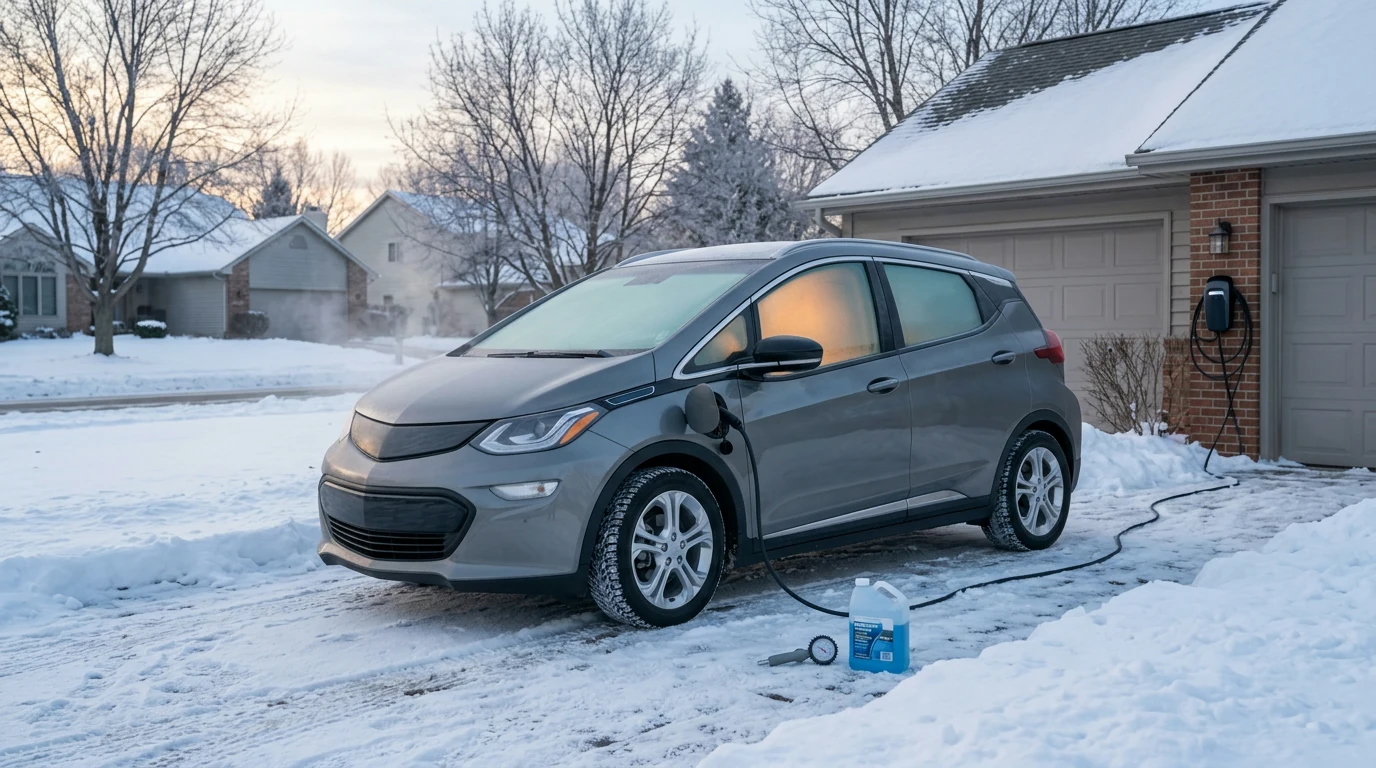
Winter driving changes how an EV uses energy: the battery delivers less power when cold, the cabin needs more heat, and charging can slow down without proper preparation. The good news is that most cold-weather headaches are predictable—and preventable. Below is a practical, keep-it-simple winter EV checklist for better range, smoother charging stops, and smarter battery care when temperatures drop.
Cold weather doesn’t “break” an EV—it changes the physics and the priorities the car uses to protect the battery and keep you comfortable.
For a high-level overview of cold-weather EV behavior, the Alternative Fuels Data Center (AFDC) has helpful cold-weather EV guidance backed by research and fleet data.
A few “set it and forget it” habits make daily winter driving far more consistent.
Charging speed in winter depends more on battery temperature than the outside air. A warm pack accepts power faster and more efficiently.
| Situation | What to do | What to expect |
|---|---|---|
| Overnight parked outside below freezing | Precondition while plugged in; schedule charge to end near departure | Better initial range and stronger regen |
| Arriving at a DC fast charger with a cold pack | Drive a bit first or route to the charger via in-car navigation to trigger battery preheat (if available) | Slower start, then speed increases as the pack warms |
| Short errands with long parking gaps | Use seat heaters, reduce cabin temp swings, keep charging topped via Level 2 when possible | Less range variability and fewer surprise drops |
| Snowstorm travel day | Start with extra buffer; plan charging stops earlier; keep speed steady | More energy used for heat and traction; longer charging time |
For deeper technical background on EV charging and battery performance, the National Renewable Energy Laboratory (NREL) publishes ongoing research and practical findings.
Winter efficiency is mostly about avoiding big spikes in energy use—especially on short trips.
For general winter driving safety reminders that still apply in an EV, review AAA winter driving tips before the first major storm.
A cold battery can’t safely accept high power, so the car limits charging speed until the pack warms up. Battery preconditioning (and arriving after a drive) raises pack temperature, which often matters more than the outdoor temperature.
For daily driving, many EVs perform best with a lower target (often around 80%) to preserve regen headroom and reduce time spent at very high charge. Charging to 100% is most useful for trip days—ideally timed to finish close to departure.
Preheat while plugged in, then lean on seat and steering wheel heaters to stay comfortable with a lower cabin temperature setting. Use defrost to clear glass quickly, then reduce fan speed and avoid big temperature swings on short trips.










Leave a comment