HomeBlogBlogWinter EV Checklist: Better Range, Faster Cold Charging

Winter EV Checklist: Better Range, Faster Cold Charging

Winter EV Checklist: Better Range, Faster Cold Charging

Winter driving changes how an EV uses energy: the battery delivers less power when cold, the cabin needs more heat, and charging can slow down without proper preparation. The good news is that most cold-weather headaches are predictable—and preventable. Below is a practical, keep-it-simple winter EV checklist for better range, smoother charging stops, and smarter battery care when temperatures drop.

Why EVs Feel Different in Winter

Cold weather doesn’t “break” an EV—it changes the physics and the priorities the car uses to protect the battery and keep you comfortable.

  • Cold batteries resist energy flow. Lower temperatures increase internal resistance, reducing available power and usable energy until the pack warms up.
  • Cabin heat can be a top energy expense. Heating and defrosting may draw more power than steady city cruising, especially on short trips.
  • Regenerative braking may be limited. When the pack is cold (or near full), the car may restrict regen, which changes one-pedal feel and can affect stopping distance expectations.
  • Tire pressure drops as temps fall. Lower PSI increases rolling resistance and can quietly reduce efficiency and handling.

For a high-level overview of cold-weather EV behavior, the Alternative Fuels Data Center (AFDC) has helpful cold-weather EV guidance backed by research and fleet data.

Before the Cold Snap: Set Up the Car for Winter Success

A few “set it and forget it” habits make daily winter driving far more consistent.

  • Enable scheduled departure or preconditioning. Warming the cabin and battery while plugged in preserves driving range and improves early-trip regen.
  • Check tires weekly using cold pressure. Inflate to the door-jamb recommendation when tires are cold; consider winter tires if roads stay icy or consistently below freezing.
  • Upgrade washer fluid and wipers. Use low-temp washer fluid and keep wipers healthy to shorten defrost time and improve visibility.
  • Update vehicle software and charging apps. Winter tweaks (routing, preconditioning logic, charging curves) often improve via updates.
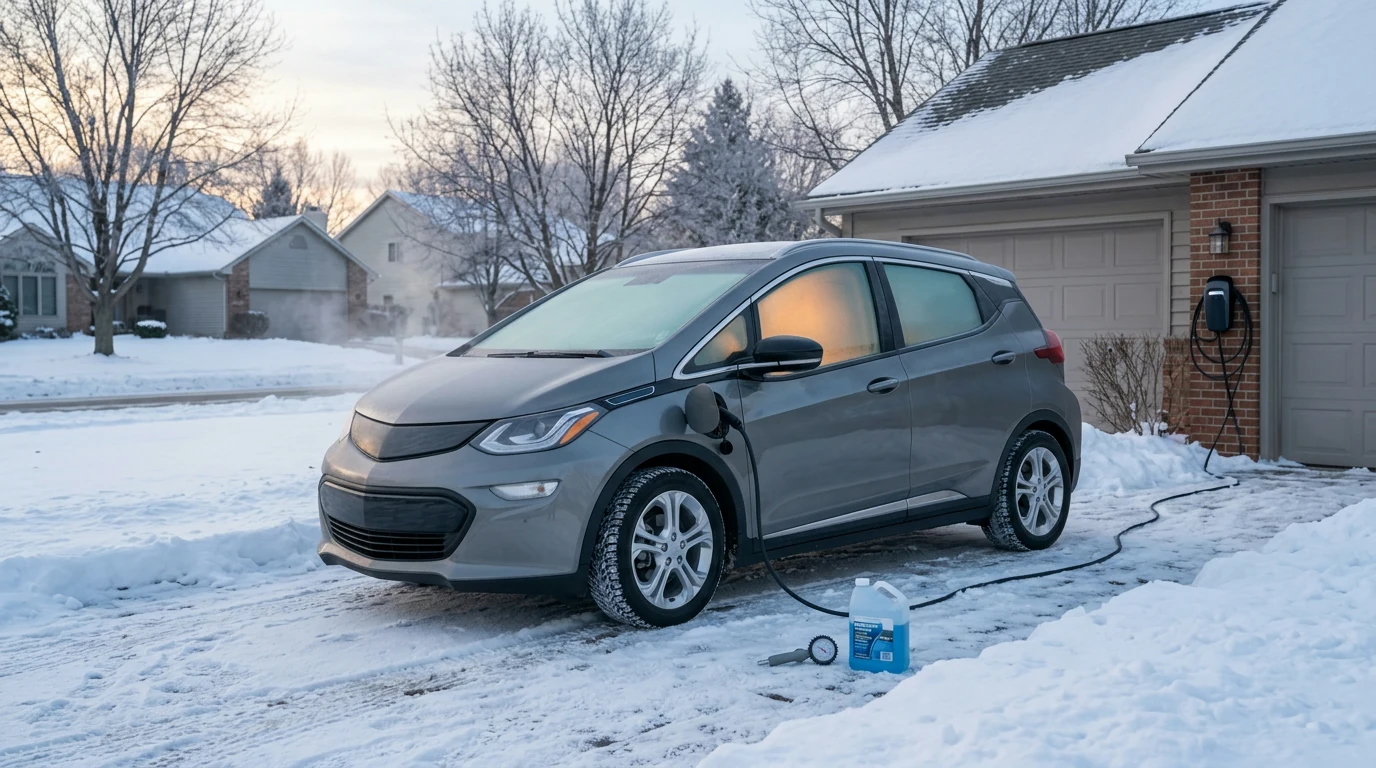
  • Confirm home charging is weather-ready. Make sure your outlet/EVSE is GFCI-protected where required, cable routing won’t freeze into snowbanks, and the plug area stays clear of ice.

Smart Charging in the Cold: Faster Sessions, Less Stress on the Pack

Charging speed in winter depends more on battery temperature than the outside air. A warm pack accepts power faster and more efficiently.

  • Warm battery = better charging. If your EV supports it, navigate to a fast charger using the car’s built-in navigation so it can preheat the pack en route.
  • Fast charge after driving. DC fast charging works best right after a drive when the battery is already warm.
  • Use a moderate daily charge window. Many drivers find 20–80% ideal for daily use, helping preserve regen headroom and avoiding “cold-soaked at 100%” conditions unless you’re departing soon.
  • On Level 2, time the finish. Scheduling charging to complete near departure often improves initial range predictability and early-trip performance.
  • Limit repeated back-to-back DC sessions in extreme cold. It’s sometimes necessary on road trips, but expect variable charge rates and plan extra time.

Cold-weather charging quick guide

Situation What to do What to expect
Overnight parked outside below freezing Precondition while plugged in; schedule charge to end near departure Better initial range and stronger regen
Arriving at a DC fast charger with a cold pack Drive a bit first or route to the charger via in-car navigation to trigger battery preheat (if available) Slower start, then speed increases as the pack warms
Short errands with long parking gaps Use seat heaters, reduce cabin temp swings, keep charging topped via Level 2 when possible Less range variability and fewer surprise drops
Snowstorm travel day Start with extra buffer; plan charging stops earlier; keep speed steady More energy used for heat and traction; longer charging time

For deeper technical background on EV charging and battery performance, the National Renewable Energy Laboratory (NREL) publishes ongoing research and practical findings.

Driving Techniques That Protect Range (and Comfort)

Winter efficiency is mostly about avoiding big spikes in energy use—especially on short trips.

For general winter driving safety reminders that still apply in an EV, review AAA winter driving tips before the first major storm.

Battery Care: Temperature, Storage, and Daily Habits

Emergency Readiness for Winter EV Trips

Recommended Winter Essentials (In Stock)

Printable Winter EV Checklist (Quick Reference)

FAQ

Why does DC fast charging feel much slower in freezing weather?

A cold battery can’t safely accept high power, so the car limits charging speed until the pack warms up. Battery preconditioning (and arriving after a drive) raises pack temperature, which often matters more than the outdoor temperature.

Is it better to charge an EV to 100% in winter?

For daily driving, many EVs perform best with a lower target (often around 80%) to preserve regen headroom and reduce time spent at very high charge. Charging to 100% is most useful for trip days—ideally timed to finish close to departure.

How can cabin heat be used without draining range so quickly?

Preheat while plugged in, then lean on seat and steering wheel heaters to stay comfortable with a lower cabin temperature setting. Use defrost to clear glass quickly, then reduce fan speed and avoid big temperature swings on short trips.

Was this article helpful?

Yes No
Leave a comment
Top

Shopping cart

×