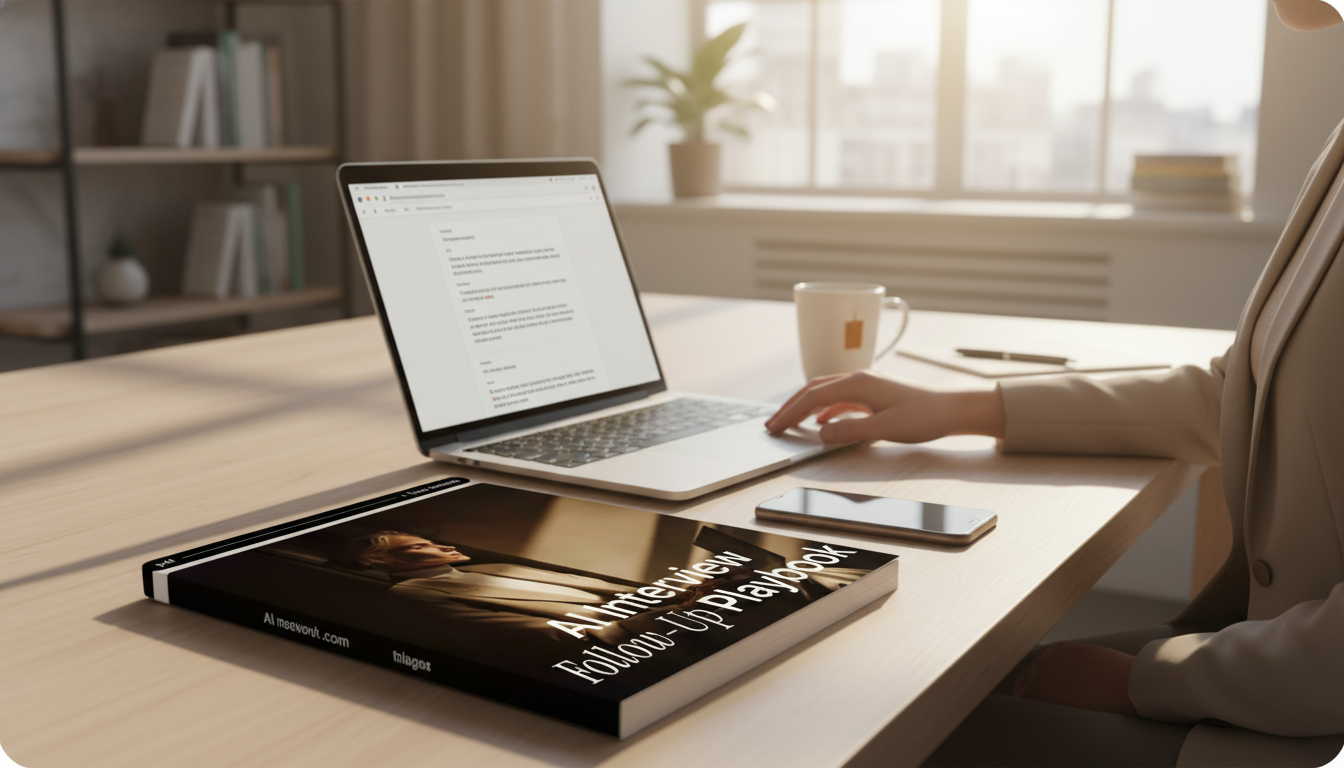
A strong interview follow-up is equal parts timing, clarity, and tone. AI can help draft polished messages quickly, but the best results come from a simple system: capture details while they’re fresh, choose the right follow-up type, generate a tailored draft, and then refine it so it sounds like a real person—professional, specific, and respectful of boundaries.
A follow-up email isn’t a formality; it’s a short, strategic reminder that makes it easier for a hiring team to remember you and move you forward. The best messages do a few things consistently:
If you want examples of solid thank-you structures, the Indeed Career Guide is a helpful reference point for what “concise and specific” looks like in practice.
AI drafts are only as good as the inputs you provide. Before you generate anything, capture a few details in a quick note (even 2 minutes helps):
One important boundary: avoid pasting sensitive company information into public tools. If your interview involved confidential details, keep your notes high-level and focused on your contribution. For broader workplace fairness and professionalism resources, the U.S. Equal Employment Opportunity Commission (EEOC) is a reputable source.
The goal isn’t to “sound AI.” The goal is to send a clear email that feels like you on your best day: organized, calm, and specific. A practical workflow looks like this:
| Message type | When to send | Include | Keep it to |
|---|---|---|---|
| Thank-you note | Within 4–24 hours | Specific conversation reference + appreciation + one value point | 90–150 words |
| Recap + value add | 24 hours (or next business day) | Brief recap + relevant resource/work sample link + offer to clarify | 120–180 words |
| Check-in | 3–7 business days (or after their stated timeline) | Polite status request + continued interest + availability | 60–120 words |
| Post-task follow-up | Same day as submission (or next day) | Confirmation submitted + what to review + quick note on approach | 90–150 words |
| Final loop-close | 7–14 business days after last contact | Professional closure + openness for future roles | 60–110 words |
Use this as a quick scan before hitting send. It’s designed to keep your note short, accurate, and easy to respond to.
If you want a ready-to-use system designed specifically for AI-assisted follow-ups, consider AI Interview Follow-Up Playbook: Checklist to How to Use AI to Follow Up After an Interview for Confident, Professional, and Personalized Emails. It’s built around the same checklist-driven approach: capture key details, generate clean drafts fast, and keep your voice in control.
Send it within 4–24 hours. Same day is great if it’s not too late in the evening; if your interview ended late, the next business morning works well and still feels prompt.
Yes—when AI is used as a drafting tool and you review the message for accuracy, tone, and personalization. Keep it honest, remove anything it “made up,” and avoid sharing sensitive details in tools you don’t control.
A practical cadence is one check-in after their stated timeline (or 3–7 business days if none was given), then one final follow-up 7–14 business days after your last contact. Keep both messages brief, polite, and easy to answer.










Leave a comment