Beginner Dog Training: Commands, Rewards & AI Tools
A Beginner’s Guide to Dog Training: Step-by-Step Commands, Positive Reinforcement, and Helpful AI Tools
Dog training gets easier when the focus stays on clear communication, short practice sessions, and rewards that matter to the dog. A simple progression helps new dog owners avoid the most common frustrations: first set up the home for success, then build a strong “marker” (click or “Yes”), teach a few core cues, and only then add distractions. Along the way, light-touch AI tools can help you stay consistent without turning training into a complicated project.
Start With the Basics: Setup, Rewards, and a Simple Routine
Before teaching commands, set up your training “system.” Consistency beats intensity, especially in the first few weeks.
- Pick 1–2 rewards to start: soft treats, kibble, a toy, or praise. Test which reward makes your dog light up, and use that most often.
- Choose a marker: a clicker or a single word like “Yes.” The marker captures the exact moment your dog is right, and the treat pays them for it.
- Keep sessions short: 3–5 minutes, 2–4 times per day. End while your dog still wants more.
- Set the environment up for success: remove temptation, use baby gates, and keep a leash handy indoors for guided practice.
- Decide household rules early: furniture access, feeding spots, and door manners should be the same for everyone so cues don’t conflict.
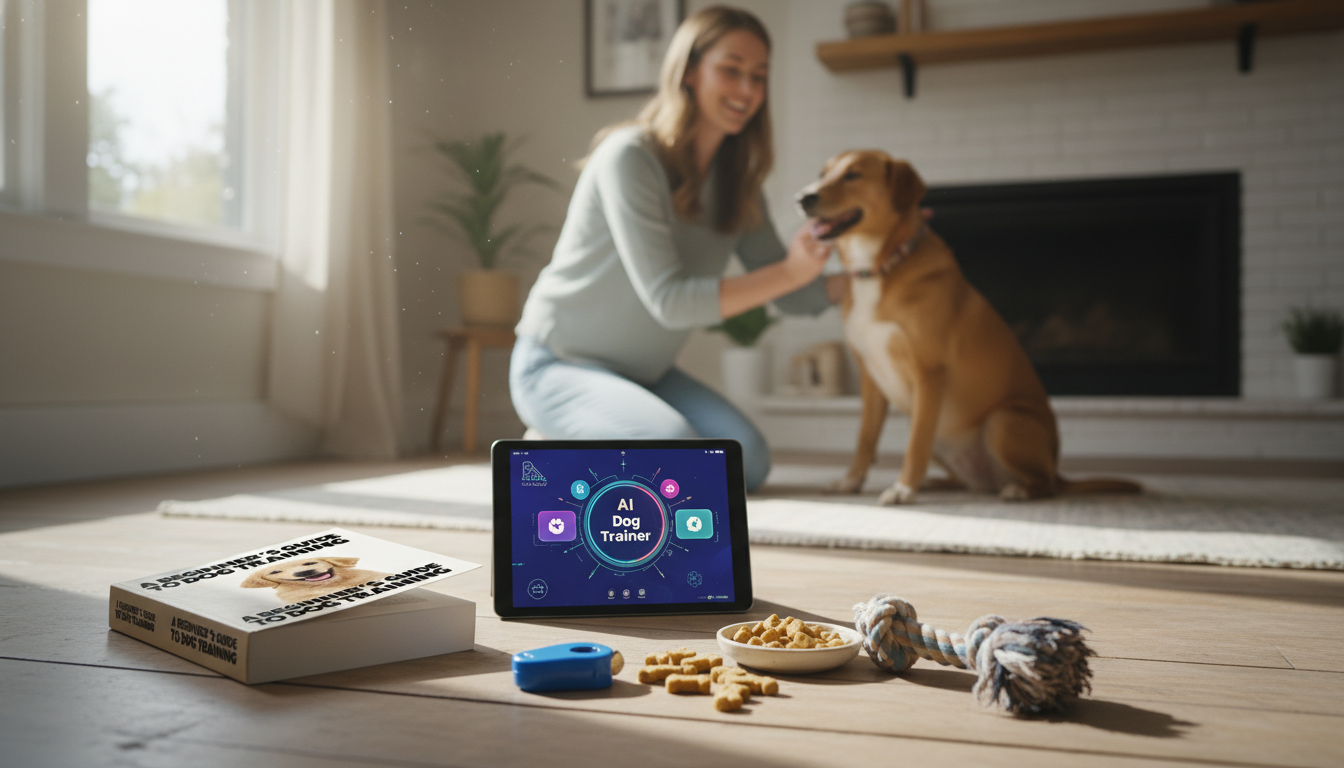
For a deeper, printable approach you can keep on your phone (or share with the whole family), consider the digital download A Beginner’s Guide to Dog Training (digital guide).
Step-by-Step: Teach the Marker and Name Response
1) Charge the marker
For 1–2 minutes, do: marker (“Yes” or click) → treat. Repeat 10–15 times. You’ll know it’s working when your dog perks up at the marker because they expect the reward.
2) Play the name game
Say your dog’s name once. When they look toward you, mark and reward. Avoid repeating the name; repetition trains the dog that the first (and second) time doesn’t matter.
3) Add mild distractions gradually
When it works in one spot, move to a different room, then the backyard, then a quiet outdoor area on leash. Increase difficulty only when your dog is succeeding most of the time.
Common pitfall
Don’t say the cue when your dog is staring at something they can’t resist. Instead, wait for a moment they can succeed (even a brief glance your way), then mark and reward.
Training Progression for Beginners
| Skill | Goal | Session length | When to increase difficulty |
|---|---|---|---|
| Marker (click/“Yes”) | Dog anticipates reward after marker | 1–2 minutes | Dog consistently looks excited after marker |
| Name response | Dog turns head/eyes to handler | 2–3 minutes | Works in 2 rooms and on leash outside |
| Sit | Dog sits on cue once | 3 minutes | Dog can sit with mild distractions |
| Down | Dog lies down on cue once | 3–5 minutes | Dog can down from standing and from a sit |
| Come | Dog returns quickly on cue (low distraction) | 2–3 minutes | Dog returns on a long line outdoors |
| Loose-leash steps | Dog walks 5–10 steps near handler | 3 minutes | Dog can do it past a mild distraction |
Easy Commands to Teach First (With Positive Reinforcement)
- Sit: lure a treat from your dog’s nose up and back. The moment their hips touch the floor, mark and reward. Once it’s predictable, say “Sit” right before the lure.
- Down: from a sit, lure the treat down between the paws. Reward when elbows hit the ground. Build duration slowly—start with 1–2 seconds, then increase.
- Touch (hand target): present an open hand. When the nose taps it, mark and reward. This is a versatile redirect and a building block for recall.
- Leave it: start with a treat in a closed fist. Mark the moment your dog stops mouthing or backs off, then reward from the other hand. Progress to treats on the floor covered by your foot.
- Place/Mat: reward any interaction with the mat. Build to four paws on, then a down. Add duration so your dog learns to settle during meals or guests.
Reward-based training is widely recommended by leading welfare organizations because it builds trust while still creating clear behavior patterns. For additional reading, see the American Veterinary Society of Animal Behavior (AVSAB) position statements and the American Kennel Club’s training basics.
Recall and Leash Skills Without the Tug-of-War
Recall (“Come”) that actually improves
Loose-leash walking without yanking
Fix Common Beginner Problems With Simple Adjustments
Using AI Tools to Stay Consistent (Without Overcomplicating Training)
Training and health go together. If you’re also dialing in feeding and treat choices, Pet Nutrition 101: What Every Pet Parent Needs to Know can help you understand basics like calories, ingredients, and using treats without overfeeding.
A Simple 7-Day Starter Plan
A Quick Reference for Rewards and Timing
FAQ
How long should a beginner dog training session be?
Aim for 3–5 minutes per session, 2–4 times per day. Stop before your dog checks out, and build progress through short, successful repetitions.
What if a dog ignores a command that was working yesterday?
That usually means the situation got harder (more distraction, fatigue, stress, or unclear cues). Drop difficulty, increase reward value, and rebuild in an easier environment before trying again.
Is positive reinforcement enough for serious behavior problems?
Positive reinforcement is effective for teaching skills and improving many issues, but serious aggression or intense fear also requires careful management and professional help. Consult a veterinarian or a qualified trainer for a safety-first plan, and avoid punishment-based approaches that can increase risk.















Leave a comment