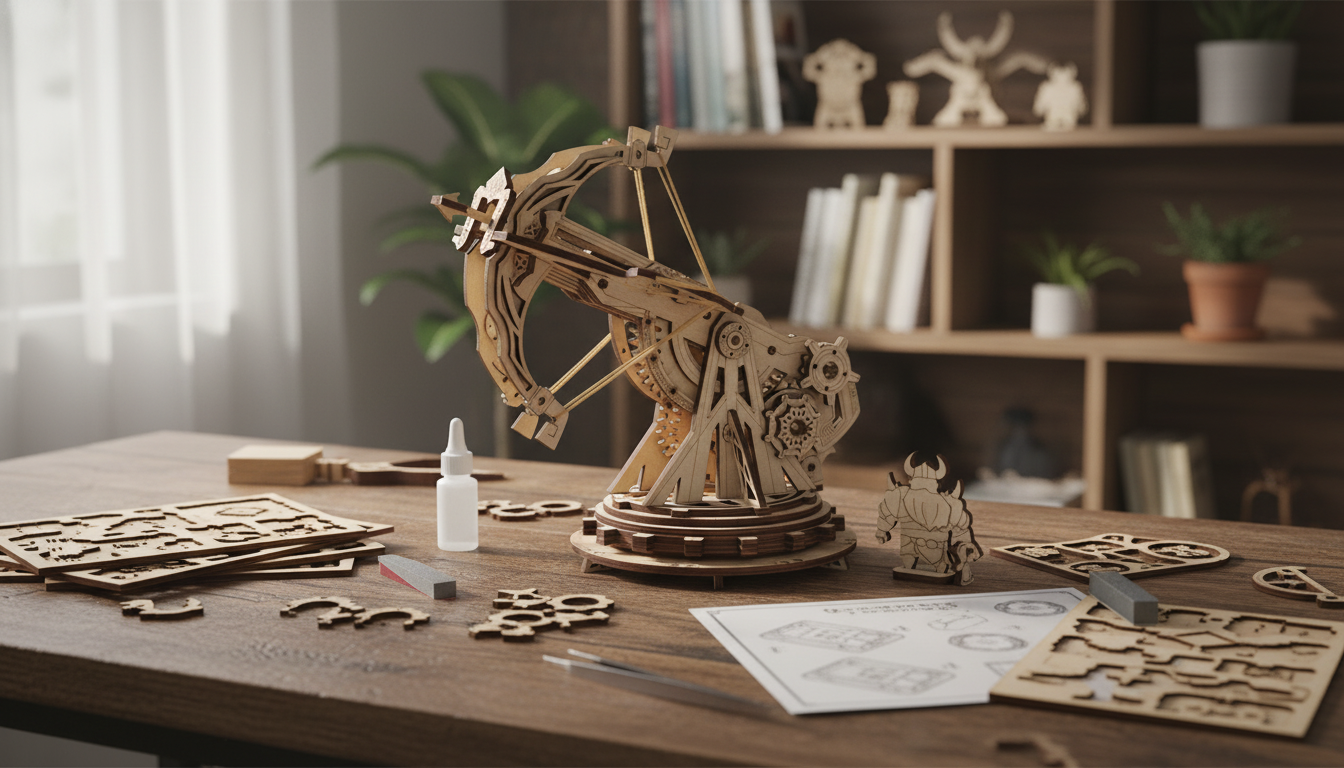
A 3D wooden puzzle set themed around medieval siege weapons combines model building, mechanical curiosity, and a touch of battlefield history—without the mess of glue-heavy kits. The result is a display-worthy build that suits game rooms, desks, and gift-giving, while keeping hands busy with satisfying step-by-step assembly.
Medieval siege engines weren’t just dramatic—they were problem-solvers. Designers chased practical goals like range, force, and repeatability, which is exactly why they translate so well into wooden mechanical-style models. Even when a finished build is primarily decorative, the geometry still suggests purpose: braced frames, tensioned arms, and sturdy bases that look like they could do real work.
Most builders love how recognizable the shapes are. Expect the “language” of siege engineering to show up in miniature: arms, winches, supports, and structural triangles that make the model feel convincingly functional at a glance. If you enjoy the real-world history behind these machines, background reading can add another layer of appreciation—see the Encyclopaedia Britannica overviews of the trebuchet and catapult.
It’s also a naturally “cross-hobby” theme: medieval enthusiasts, tabletop gamers, reenactment fans, and anyone who likes clever mechanisms tend to enjoy the build-and-display payoff. Pair it with other historic inspiration—like objects and references from the Met’s Arms and Armor collection—and it becomes a small centerpiece for a larger, curated shelf.
Most 3D wooden puzzles arrive as pre-cut sheets where pieces release from the board and lock together using tabs and notches. That “press-fit” experience is the heart of the fun, but it also rewards patience: removing parts carefully helps prevent splintering and keeps edges crisp for a cleaner finish.
Assembly is usually sequential. You’ll typically start with a stable base, add the main structural supports, then layer on moving or decorative elements. The instructions tend to guide this in a way that feels like real construction—foundation first, then framework, then details.
Time investment depends on experience and how neat you want the final fit to be. If it’s your first kit, it’s worth planning a relaxed session rather than trying to finish at full speed. A flat, well-lit workspace plus a small tray (or bowl) for loose parts can save a lot of “where did that piece go?” frustration.
| Step | Why it helps | Tip |
|---|---|---|
| Sort pieces before starting | Reduces mid-build confusion | Group by sheet or by shape |
| Use a craft knife (optional) | Helps release tight parts cleanly | Cut away from the body and fingers |
| Light sanding (optional) | Smoother fit and finish | Sand tabs lightly if joints are too tight |
| Dry-fit critical joints | Prevents forced cracks | Test alignment before pressing fully |
Once assembled, a siege-weapon model reads like a miniature artifact: part engineering, part storytelling. It works as shelf decor, a desk conversation piece, or a focal point in a medieval-themed collection. Even if the model’s main purpose is display, the layered construction often produces a satisfying “built” look that feels more substantial than a standard puzzle.
Some kits include moving components—like rotating parts or an articulated arm—which keeps it hands-on even after assembly. That small motion goes a long way: it makes the finished piece feel interactive and “alive,” especially when shown to friends or added to a tabletop setup.
For collectors, themed builds are easy to grow into a full display: stack a few fantasy novels nearby, add a map-style poster, or arrange miniatures around the model. For gifting, an unbuilt kit is an experience (a cozy evening project), while a completed model is a keepsake—two wins in one box.
If the goal is a medieval siege-engine look with satisfying, hands-on assembly, 3D Wooden Puzzle Medieval Siege Weapons is designed to deliver that mechanical silhouette and displayable result. It’s a strong fit for builders who enjoy structured shapes, historic inspiration, and a finished piece that looks good on a shelf or desk.
For gift bundles, it also pairs well with non-building items that enhance the display corner—like a decorative accent piece or a quick-read guide that complements a cozy hobby evening. Consider adding Hand-Painted Jade Porcelain Cheongsam Vase – Retro Chinese Ceramic for Flower Arrangements for a refined shelf setup, or a low-effort add-on like Pet Nutrition 101: What Every Pet Parent Needs to Know | Essential Pet Food Guide, Nutrition Basics Every Pet Parent Should Know | Digital eBook Download if the recipient also enjoys digital reads and practical guides.
| Item | Details |
|---|---|
| Product | 3D Wooden Puzzle Medieval Siege Weapons |
| Price | 20.51 USD |
| Availability | In stock |
Many kits are designed to be press-fit with tab-and-slot construction, so glue is often optional. If you want extra durability for long-term display, use a tiny amount only on joints that feel loose.
It’s generally best for teens and adults who have the patience for careful part removal and step-by-step assembly. Because small pieces can be hazardous, younger builders should be supervised.
Most builders can expect roughly 1–3 hours depending on experience and how much time is spent on prep like sorting and dry-fitting. Planning a relaxed session usually leads to a cleaner finish.










Leave a comment