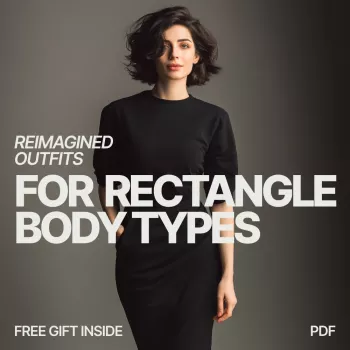
Rectangle body types often look effortlessly sleek, but getting outfits to feel “shaped” can be tricky when waist definition is subtle. The most reliable approach is to build dimension with structure, strategic volume, and intentional waist cues—without forcing uncomfortable silhouettes. This guide lays out the outfit principles, go-to formulas, and a practical blueprint that turns everyday dressing into repeatable wins. For more guidance, see How to Dress a Rectangle Body Shape.
Rectangle proportions typically read as balanced from top to bottom: shoulders and hips appear similar in width, the waist is less dramatically indented, and the line from shoulder to hip looks straight. That isn’t something to “correct”—it’s a styling advantage. Clean lines, modern tailoring, and minimal outfits often look especially polished on a straighter frame. For further reading, see Dress Guide for the Rectangle Body Shape.
When you want more definition, the goal is simple: add visual dimension where you want it (waist, shoulders, hips) using clothing “architecture”—seams, structure, strategic volume, and clear breakpoints.
If you only remember three tools, make them these: waist cues, shoulder structure, and hip volume/movement. Combining just two of them usually creates an instantly more contoured silhouette.
| Lever | What to look for | Easy outfit pairing |
|---|---|---|
| Waist cues | Wrap tops, belted blazers, high-rise bottoms, curved darts | Wrap knit + high-rise straight jeans + ankle boots |
| Shoulder structure | Structured blazers, puff sleeves, square/scoop necklines | Crewneck tee + structured blazer + midi skirt |
| Hip volume | A-line, pleats, wide-leg, paperbag waist | Fitted tank + wide-leg trousers + belt |
Formulas beat guesswork. Keep a few on standby and swap colors, fabrics, and accessories to fit the day.
Try a fitted tee, bodysuit, or ribbed tank with an A-line skirt or wide-leg trousers. This creates a clear curve through contrast—streamlined on top, movement below.
Add a blazer, vest, or cardigan that subtly nips at the waist or ends at the high hip. Tailoring does the “shaping work” without needing skin-tight pieces.
A cropped jacket or cardigan over high-rise jeans draws a sharp line at the waist, creating a flattering breakpoint (and longer-looking legs).
Wear one color head-to-toe, then add a belt or contrasting waistband. The streamlined column looks sleek, while the interruption suggests a defined middle.
A wrap blouse with straight jeans or trousers gives definition without bulk. It’s especially strong for workwear and dinners when you want polish plus comfort.
For a ready-to-use set of outfit combinations you can plug your existing basics into, the Reimagined Outfits for Rectangle Body Types – Style Guide eBook is built around these same repeatable silhouettes.
Square, scoop, sweetheart, and wrap V necklines add curvature and frame the torso in a way that naturally reads more contoured. Crew necks can still work well—pair them with a structured blazer, bolder earrings, or a sharper shoulder line for definition.
Puff, cap, flutter, and crisp set-in sleeves add shape at the top and create a stronger shoulder-to-waist transition. Very limp sleeves can sometimes make the torso read straighter, especially when paired with a straight, long top.
Cropped at the waist or ending at the high hip is often the sweet spot. Super-long tops can hide your best waist cue and stretch the rectangle effect—if you love the length, use a half-tuck, a knot, or a belt to reintroduce a breakpoint.
High rise defines the waistline and lengthens the legs, especially with a tucked or semi-tucked top. Straight-leg and gently tapered cuts keep the look clean; wide-leg adds hip movement if you want extra curve.
A-line skirts add structure and shape through the hips. Bias cuts bring softer movement and a subtle curve—great when you want definition without anything stiff or tight.
Paperbag waists and front pleats add dimension right where rectangle proportions benefit most: the waist-to-hip zone. Keep tops streamlined (fitted knits, tanks, bodysuits) so the volume reads intentional.
If you like a simple “get ready” routine that elevates the final look, a small grooming tool can help outfits feel more intentional—consider the Ice Roller for Face & Eyes for a quick, refreshed finish before you head out.
Dependable options include a wrap or square-neck top with a high-rise bottom, a fitted top with wide-leg pants, a belted blazer over straight trousers, a wrap or fit-and-flare dress, and a cropped jacket paired with high-rise jeans.
No—belts are optional, just effective. Alternatives that create the same waist cue include wrap lines, curved seams, cropped lengths, peplum details, and high-rise bottoms; if you do belt, a medium width is the most versatile.
Avoid going boxy head-to-toe, very low-rise bottoms, and long untucked tops that hide the waist breakpoint. If an outfit feels flat, add a belt or a structured layer and mix stiff pieces with drapier fabrics for dimension.









Leave a comment