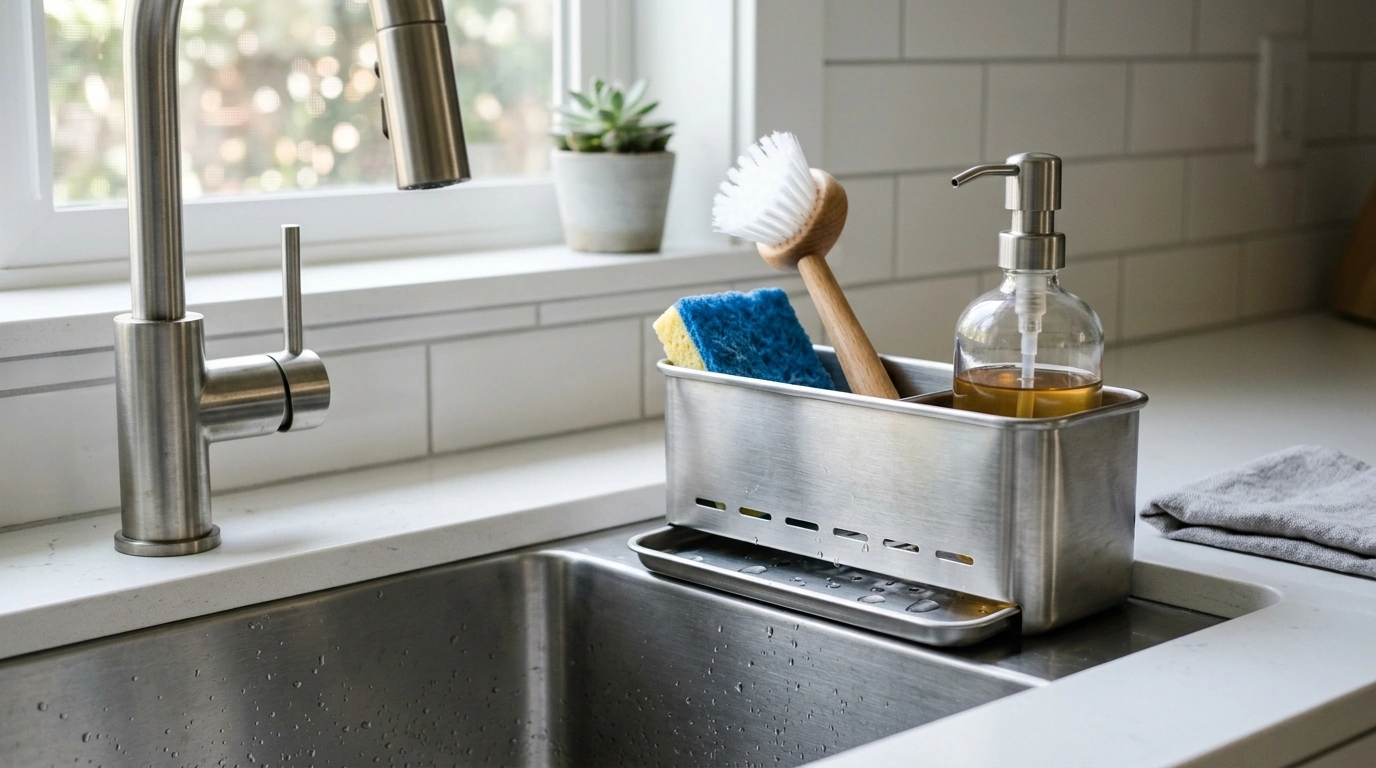
A sink area stays cleaner and feels less cluttered when sponges, brushes, and soap have a dedicated spot that drains well and dries quickly. A stainless steel sink caddy helps keep wet tools contained, reduces mess on the counter, and makes daily cleanup easier—especially in small kitchens where every inch matters.
A well-designed sink caddy turns the “pile by the faucet” into a simple system. Instead of moving wet items around all day, everything has a consistent home that’s easy to grab and easy to rinse.
The sink is one of the toughest “wet zones” in the kitchen: splashes, soap residue, temperature changes, and frequent wipe-downs. Stainless steel is popular here because it stays stable and presentable with routine care.
For general material and cleaning considerations, sources like World Stainless and practical kitchen-cleaning guidance from the American Cleaning Institute can be helpful references when building better routines around high-use surfaces.
Most sink odors don’t come from the caddy itself—they start when a sponge stays wet for too long or when water collects underneath tools. The best designs emphasize airflow, drainage, and easy emptying.
| Type | Best for | Drying performance | Potential drawback |
|---|---|---|---|
| Stainless steel caddy with open design | Daily sponge/brush storage near the sink | Strong airflow and faster drying when well-vented | Needs regular wipe-down to avoid water spots in hard-water areas |
| Plastic caddy with closed compartments | Budget setups and lightweight storage | Often slower drying if ventilation is limited | Can absorb odors/stain over time; may warp with heat |
| Coated metal organizer | Matching a specific color scheme | Varies by design; depends on ventilation | Coating can chip and lead to rust in wet zones |
| Counter tray + separate holders | Flexible layout for multiple bottles/tools | Depends on spacing; can be good with airflow | More pieces to clean; tray can collect grime |
The “right” sink caddy isn’t just about looks—it’s about how it fits into your daily motion at the sink. A few quick checks can prevent a cramped setup or constant bumping into the faucet.
A sink caddy works best when it supports a simple routine: rinse, drain, return. Small habits keep the area looking intentional instead of “temporarily tidy.”
For broader household hygiene and cleaning/disinfecting considerations, the CDC offers general guidance you can adapt to your kitchen routine.
Give it a quick rinse and wipe weekly; deep-clean more often if soap scum or mineral deposits build up. Drying it after cleaning helps prevent water spots.
Quality stainless steel resists corrosion, but surface staining can happen if harsh chemicals, salty water, or metal debris sit on it. Regular rinsing, gentle cleaning, and drying reduce the risk.
An open, ventilated design plus draining that keeps tools out of standing water helps the most. Squeezing out excess water before storing also makes a big difference.












Leave a comment