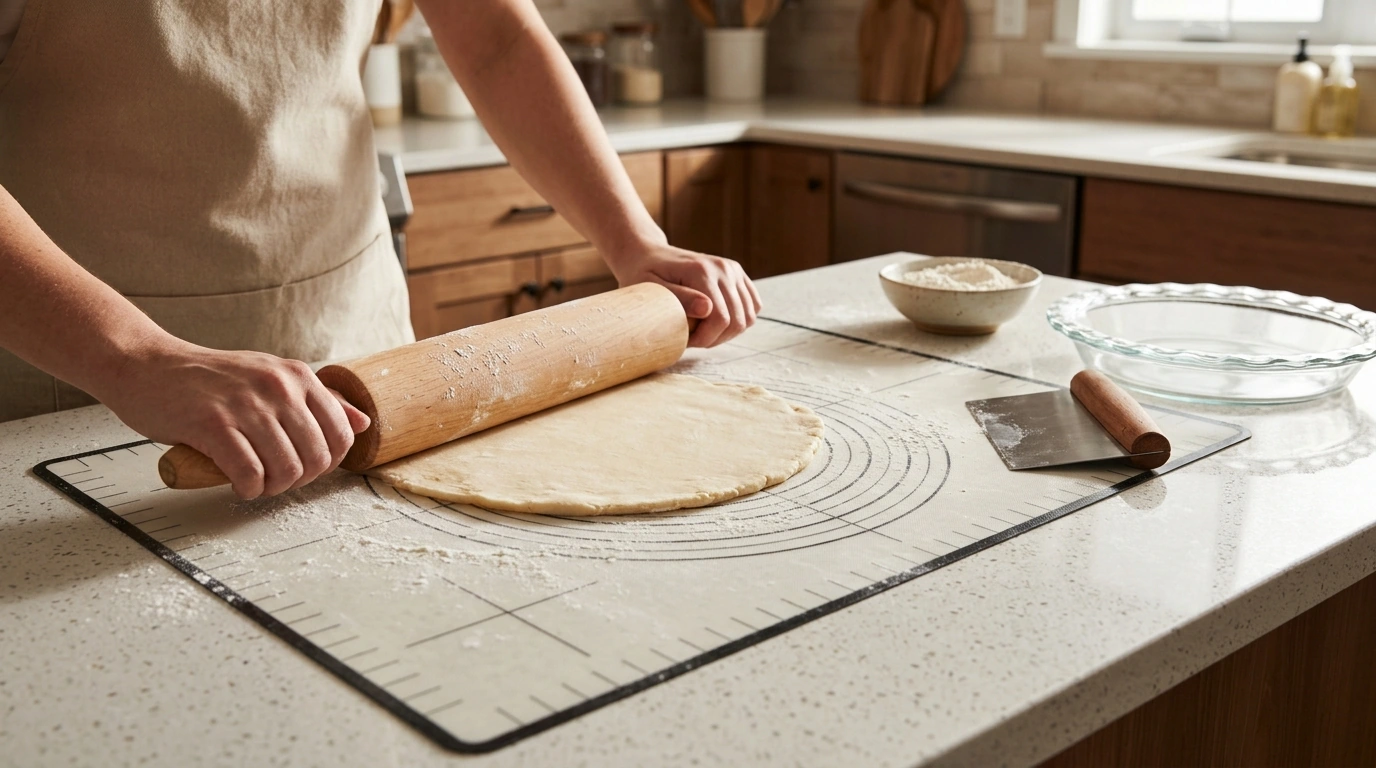
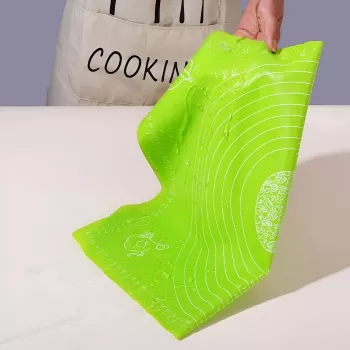
A silicone kneading and baking mat creates a stable, non-stick workspace for dough, pastry, and candy work while keeping counters cleaner. Built-in measurement guides help portion dough, size crusts, and roll consistent thickness—useful for everyday baking, meal prep, and quick kitchen projects. When you can roll “to the line,” you spend less time guessing and more time getting repeatable results.
Silicone’s “grab” is especially helpful when you’re working quickly—cutting biscuit rounds, folding laminated dough, or scraping up sticky remnants with a bench scraper. It’s also a nice upgrade for rented spaces or delicate countertops where you want protection without dedicating a cutting board to rolling.
If you plan to use the mat beyond dough—like tempering chocolate or shaping candy—prioritize easy cleanup and edges that stay flat. And for anything labeled for food contact, it’s smart to stick with recognized guidance on food-contact materials, such as the U.S. Food & Drug Administration’s Food Contact Substances information and the general reference in CFR Title 21 (Indirect Food Additives).
Measurements aren’t just for show. They help you match a pan size, keep dough thickness consistent, and repeat a successful bake without rewriting notes. That can be the difference between a pie crust that fits with overhang and one that tears when you stretch it to reach the rim.
| Task | Common sticking issue | How the mat helps | Measurement cue to use |
|---|---|---|---|
| Pie crust | Butter warms and adheres to the counter | Non-stick surface helps lift dough with less tearing | Target diameter rings for pan size |
| Pizza dough | Elastic dough snaps back and grabs the surface | Stable work area improves rolling control | Circle/edge guides for uniform shape |
| Cookie dough | Soft dough smears when lifted | Easier scraping and clean transfers | Grid guides for spacing and portioning |
| Fondant | Sugar paste clings and stretches | Less sticking with minimal powdered sugar | Grid for straight edges and consistent thickness |
| Bread shaping | Hydrated dough spreads and sticks | Defined kneading zone reduces cleanup | Center marks for repeatable portion sizes |
A simple workflow that stays consistent: place the mat, choose your target measurement (for example, a crust ring), roll from the center outward, rotate the dough a quarter turn, and check the guide again. That rhythm helps you avoid overworking dough while still landing on the size you need.
Confirm the care instructions for the specific mat; many silicone mats can go in the dishwasher. If your mat has printed measurement markings, gentle hand-washing often helps keep the print crisp longer.
Start with a clean, dry surface so the silicone can grip. If it still shifts, add a few drops of water under the mat and spread it into a thin film to create light suction.
Only if the mat is rated for baking temperatures. Follow the listed heat limits and place the mat on a sheet pan for support instead of putting it directly on oven racks.










Leave a comment