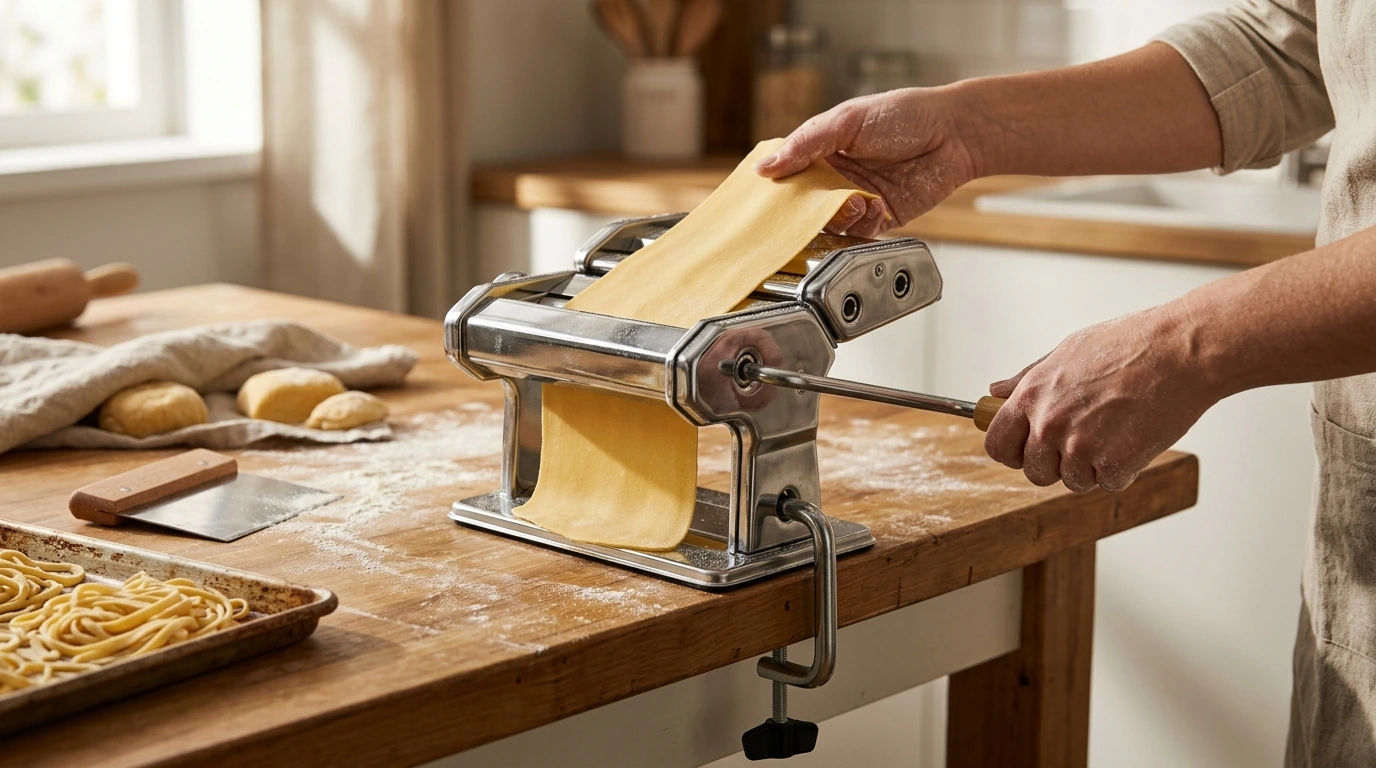
A manual pasta maker brings the texture and taste of fresh noodles to everyday cooking—without electricity or bulky equipment. With a stable clamp, adjustable rollers, and a simple hand crank, it’s built for consistent sheets you can cut, fold, and cook right away or dry for later. If you’ve ever wanted tender lasagna sheets, springy fettuccine-style strands, or neatly sealed ravioli, a hand-crank set makes the process feel approachable and repeatable.
A good hand-crank roller is more than a “noodle cutter.” It’s primarily a sheet-making tool, and that’s what unlocks most shapes.
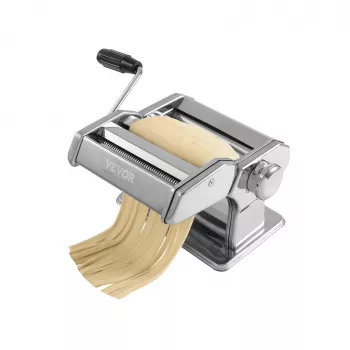
If you’re shopping for a simple, countertop-friendly option, the Manual Pasta Maker Machine Set is a practical starting point for everyday rolling and cutting.
Stability is the difference between “fun weekend project” and “why is this sliding everywhere.” Take a minute to set up a reliable station.
Manual rollers reward a dough that’s firm, rested, and just lightly floured. If the dough is fighting you, adjust the dough—not the machine.
For technique references and dough basics, trusted guides like King Arthur Baking and Serious Eats offer helpful visuals and troubleshooting tips.
A consistent workflow keeps the sheet even, prevents tearing, and makes cutting cleaner.
Keep unused dough covered. Even a few minutes of air exposure can create dry edges that crack when you roll them thin.
Thickness is where handmade pasta becomes “your pasta.” Humidity, flour type, and egg size all shift the ideal setting, so use the sheet’s look and feel as your compass.
| Use | Suggested sheet thickness | Practical cue |
|---|---|---|
| Lasagna sheets | Medium | Flexible sheet that won’t sag or tear when lifted |
| Ravioli/tortellini wrappers | Medium-thin | Seals well around filling without splitting at the edges |
| Tagliatelle/fettuccine-style noodles | Thin to medium-thin | Sheet looks smooth and semi-translucent at the edges |
| Very delicate noodles | Thin | Sheet drapes easily and cooks quickly; handle gently to avoid sticking |
Rollers last longer when they stay dry, clean, and free of packed flour.
If you like cooking proteins and vegetables alongside your noodles, consider the Reversible Pre-Seasoned Cast Iron Griddle with Non-Stick Surface for BBQ and Cooking as a sturdy companion for searing and meal prep on pasta night.
For safe storage of leftovers (like cooked pasta or sauce), follow time-and-temperature guidance from the USDA Food Safety and Inspection Service.
Yes, but results depend on dough elasticity. Whole-wheat often benefits from extra resting and slightly higher hydration; many gluten-free doughs are more fragile and may need gentler rolling, thicker final sheets, and careful flouring to prevent sticking.
Typically no. Keep rollers clean and dry, and follow the care instructions for your specific set. If the manufacturer recommends a tiny amount of food-safe oil on exterior parts, apply sparingly and never flood the rollers.
Short rests on a lightly floured tray are fine while shaping. For longer holds, refrigerate portions (covered) or dry pasta when conditions are suitable; avoid letting strands pile up, which encourages sticking.









Leave a comment