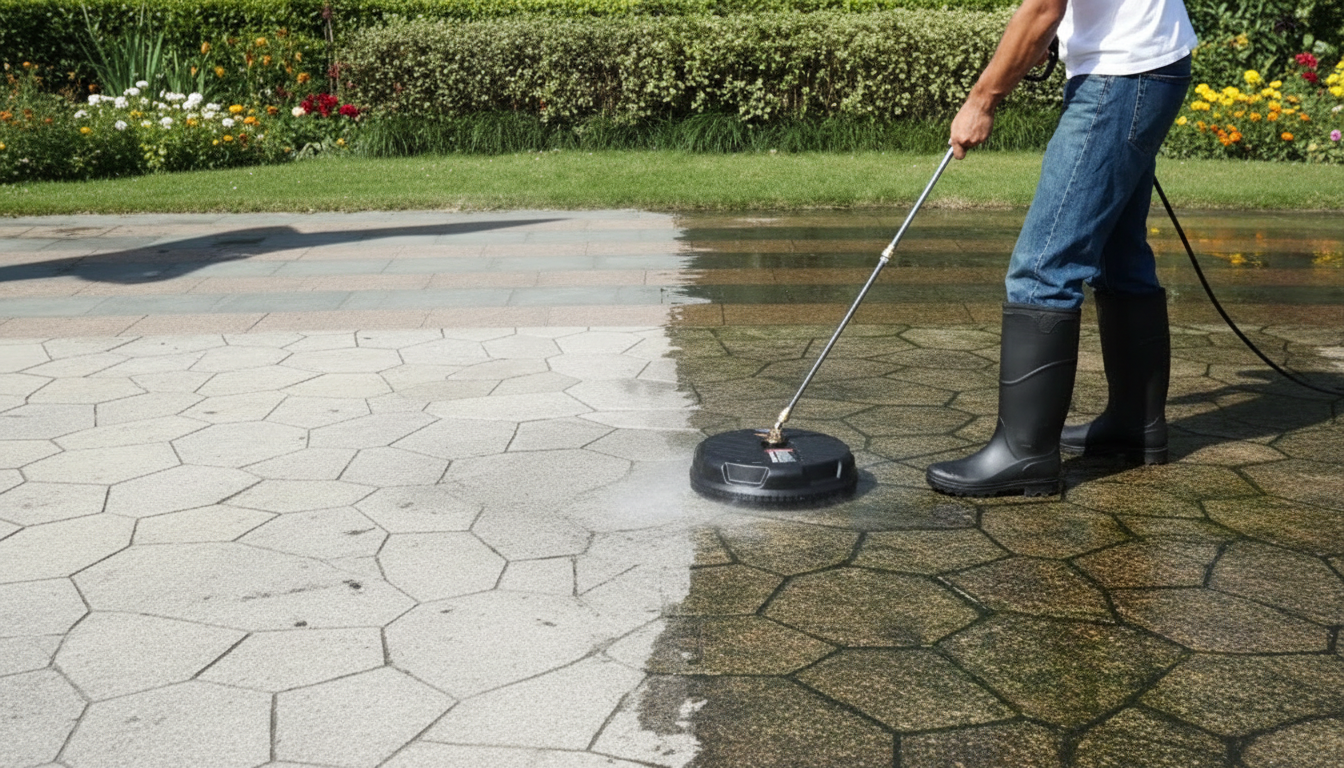
Yes. A 3000 psi pressure washer is strong enough to clean most concrete surfaces, including driveways, sidewalks, patios, and garage floors. That pressure level can lift typical dirt, mud, algae, and many surface stains when paired with the right nozzle, distance, and technique.
For routine cleaning, 3000 psi is more than adequate. It can remove built-up grime, light-to-moderate mildew, and traffic film that makes concrete look dull. With consistent passes and proper dwell time from a cleaner (when needed), it can also noticeably improve the look of older slabs.
Some discoloration isn’t “dirt” but staining within the pores—think deep oil spots, rust, and old fertilizer stains. A 3000 psi washer can help, but results depend on how long the stain has set and whether a concrete-safe degreaser, rust remover, or poultice is used first. Also, paint, sealers, and heavy tire marks can require specialized chemicals or mechanical agitation.
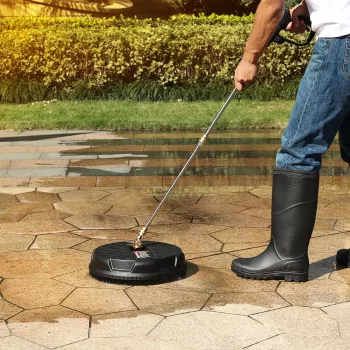
Concrete is durable, but a concentrated stream can etch it if held too close. Start with a wider spray pattern, keep the tip moving, and work from a consistent distance (often 8–18 inches depending on the nozzle and soil level). For large flat areas, a surface cleaner attachment is usually faster and more uniform than a wand because it reduces striping and speeds up coverage.
If the goal is an even, professional-looking clean on a driveway or patio, a 15-inch surface cleaner is a practical match for many 3000 psi machines. It spreads the cleaning power across rotating jets, helping you finish quicker with fewer lines and less fatigue. For sizing, fittings, and setup details, see the guide here: https://groovy.sale/guide-15-inch-surface-cleaner-attachment-quick-connect-concrete/.
A 25-degree (green) nozzle is a common starting point for general concrete cleaning, while a 40-degree (white) nozzle is safer for lighter rinsing. Avoid using a 0-degree tip on concrete unless you’re experienced and need pinpoint cleaning, since it can etch the surface.









Leave a comment